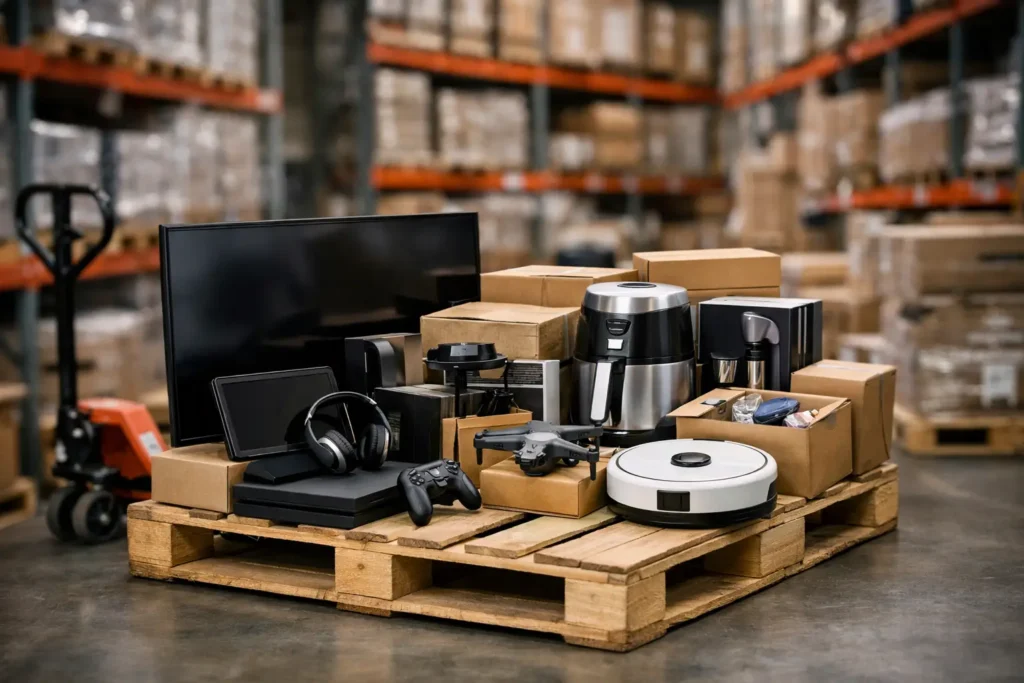
A pallet is only a bargain if the merchandise actually sells. That is why the best products for pallet flipping in USA are not always the biggest-name categories or the cheapest lots. The right inventory matches your selling channel, your available cash, your storage space, and the customers already buying from you.
For most resellers, branded footwear, tools, home goods, seasonal merchandise, and carefully selected electronics offer the strongest combination of demand and resale potential. The catch is that every category carries different risks. Smart pallet flipping starts with choosing inventory you can inspect, price, list, and move without letting it sit for months.
What Makes a Pallet Product Worth Flipping?
Before buying a pallet, think beyond the advertised retail value. MSRP can make a mixed lot look impressive, but it does not tell you what buyers will pay, how much work the merchandise needs, or how quickly your investment comes back.
A profitable pallet category usually has recognizable brands, steady buyer demand, practical shipping costs, and enough condition consistency to price items confidently. It should also fit your sales model. A flea market seller may do very well with low-ticket household goods, while an online sneaker seller needs clean pairs, accurate sizing, and brands people search for by name.
Condition matters just as much as category. Overstock and shelf pulls are usually easier to merchandise because they may be new or close to retail-ready. Customer returns can create bigger upside, especially in electronics and tools, but they require testing, sorting, cleaning, and realistic pricing. Do not pay an overstock price for a return-heavy pallet simply because the manifest lists premium retail values.
Best Products for Pallet Flipping in USA Markets
Footwear and sneaker pallets
Footwear is one of the strongest pallet-flipping categories because buyers understand brands, sizes are standardized, and a single pallet can support several resale channels. Athletic shoes, work boots, casual footwear, sandals, and kids’ shoes all have active markets when condition and assortment are right.
Branded sneakers can deliver high margins, but they also require more discipline. Check for matching pairs, correct boxes when included, visible wear, odors, sole separation, and authenticity concerns. New-with-box and shelf-pull footwear is generally faster to list and easier to price than untested returns. Mixed footwear pallets can also protect you from relying on one style or season.
Sell premium pairs individually through sneaker-focused platforms or online marketplaces. Move everyday shoes in bundles, local sales, discount racks, or live sales. The real advantage is flexibility: one footwear pallet can feed multiple channels instead of forcing you to find one buyer for everything.
Power tools and home improvement merchandise
Tools have a built-in resale audience. Contractors, homeowners, repair shops, and local buyers regularly search for drills, saws, hand tools, organizers, hardware, lawn equipment, and workwear. Recognizable tool brands tend to move especially well because shoppers already know what they are getting.
This category performs best when you can test it. A returned drill with a missing battery or charger may still sell, but it needs to be listed honestly and priced as incomplete. For beginners, hand tools, sealed accessories, hardware kits, and new surplus items are lower-risk than pallets packed with untested cordless tools.
Freight and storage deserve attention here. Tool pallets are heavy, so shipping can eat into margin fast. If you sell locally through Facebook Marketplace, flea markets, or a storefront, heavy merchandise may be more profitable than it looks online because you avoid shipping individual items.
Small appliances and home essentials
Home merchandise has broad demand because people always need practical products. Kitchen tools, air fryers, coffee makers, storage items, bedding, lighting, small furniture, cleaning supplies, and home décor can sell year-round. These products are often easy to bundle and work well for discount stores, bin stores, market vendors, and online sellers.
Small appliances are a good example of a category where condition changes everything. Factory-sealed units can be straightforward flips. Returns may have missing parts, cosmetic damage, or safety issues that make testing necessary. Avoid assuming every appliance can be resold as working just because it powers on. Check basic operation, accessories, cords, and packaging before listing.
Home essentials usually have lower individual selling prices than premium sneakers or tools, but they can produce steady cash flow. That matters when you need inventory that moves every week rather than a few high-ticket items that take longer to sell.
Consumer electronics and accessories
Electronics can be highly profitable, but they are not a beginner-friendly category unless you have a testing process. Phones, tablets, gaming accessories, headphones, smart home devices, cameras, computer accessories, and small audio products have strong demand. They also bring higher return rates if listings are inaccurate.
Accessories are often the safer play. New cables, cases, chargers, keyboards, mice, speakers, and gaming peripherals are easier to test and ship than used laptops or large televisions. Look closely at whether products are sealed, open-box, returned, locked, damaged, or missing components.
Avoid building your first electronics purchase around a retail value number alone. A pallet of untested devices can contain excellent inventory, but it can also contain locked phones, cracked screens, dead batteries, and units that cost more to repair than they are worth. Buy these lots only when the discount leaves room for losses.
Health, beauty, and personal care products
Beauty and personal care products can move quickly because they are lightweight, inexpensive to ship, and frequently repurchased. Hair tools, skincare devices, unopened cosmetics, grooming products, and branded personal care items can work well for online stores and local resale.
The non-negotiable rule is product safety. Focus on sealed, unopened, current merchandise. Do not resell used cosmetics, compromised personal care products, or anything expired. Check labels, packaging, recalls, and any marketplace restrictions before building a business around a specific product type.
This category works best for sellers who can create clean bundles. A group of compatible sealed items may sell better than each item alone, especially when individual retail prices are low. Bundling also helps clear slower inventory without cutting every item to the bottom dollar.
Seasonal goods, toys, and general merchandise
Seasonal pallets can create fast sales when purchased ahead of demand. Holiday décor, outdoor products, back-to-school supplies, patio items, winter accessories, and toys can all produce strong returns during the right selling window. The risk is obvious: late inventory becomes clearance inventory.
Toys and general merchandise are useful for sellers who need variety. They can fill booths, discount shelves, live-sale auctions, and local marketplace listings. However, mixed general merchandise pallets often take more labor to sort because item values vary widely. They are better for sellers with room to organize inventory and a plan for low-value items.
Match the Pallet to Your Sales Channel
The best product is not universal. It depends on how you sell. eBay and other online marketplaces reward branded, searchable items with clear condition notes. Facebook Marketplace is often ideal for bulky home goods, tools, furniture, and bundled merchandise. Flea markets and discount stores need low-cost products that shoppers can see, touch, and buy immediately.
If you are selling on Amazon, verify category requirements, invoices, condition rules, and brand restrictions before you buy. Liquidation inventory may be legitimate merchandise, but that does not automatically mean every item is eligible for every platform. Build your purchase around the channels you can use today, not the channels you hope to open later.
Buy Smaller Before You Buy Bigger
New buyers often make one expensive mistake: they buy a full pallet in a category they have never sold. A smaller box lot or a single pallet lets you learn how long sorting takes, what condition problems appear, what sells locally, and what your real net profit looks like after freight, supplies, platform fees, refunds, and labor.
When you are ready to scale, buy deeper in categories that have already proven themselves in your business. Pallet Liquidation Wholesale Online offers inventory by box, pallet, and truckload, giving resellers room to start with manageable volume and move up when their sales process is working.
Ask for available details before committing: the merchandise type, condition grade, estimated item count, brand mix, manifest status, pickup or freight cost, and whether the lot includes returns. Then compare the landed cost, not just the pallet price. A cheap pallet with expensive freight or excessive damage is not a deal.
Protect Your Margin After the Delivery
The work begins when the freight arrives. Sort immediately into sell-now, test, clean, bundle, parts, and unsellable groups. Photograph better items first and list them where they have the best chance of bringing full value. Do not let the entire pallet wait until every item is processed.
Price with enough room for offers, fees, and occasional losses. Fast-moving merchandise can often be priced competitively to recover your investment early, while higher-value items can be held for the right buyer. Keep records by pallet so you know which categories are producing cash, not just activity.
Choose inventory that your customers already want, buy it at a cost that leaves room for real-world problems, and turn the first sales into working capital for the next opportunity.