
A pallet that looks cheap on paper can still be a bad buy if the category is wrong, the condition is unclear, or the freight kills your margin. That is why serious resellers look at liquidation merchandise pallets as a sourcing decision, not just a bargain. The goal is simple: buy below market, move inventory fast, and protect profit on every lot.
For resellers, discount store owners, online sellers, and bulk buyers, pallets solve one problem fast – access to inventory at a price that leaves room to resell. But not every pallet performs the same way. Some are built for quick-turn marketplaces. Others make more sense for bin stores, flea markets, outlet setups, or export. Knowing the difference is what separates a smart buy from a warehouse full of slow movers.
What liquidation merchandise pallets actually include
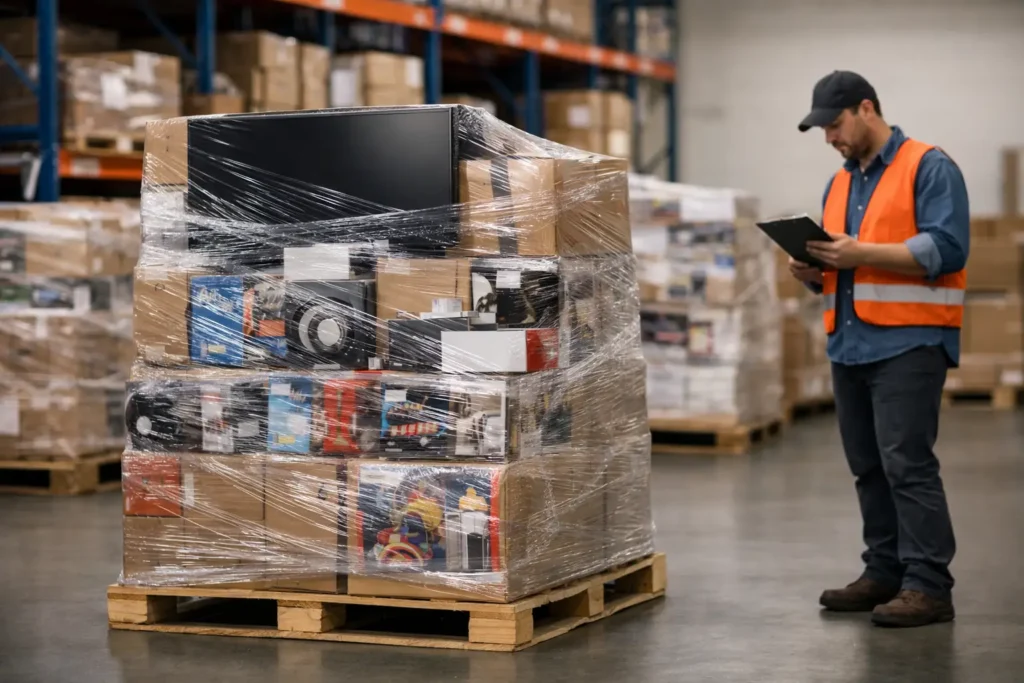
Liquidation merchandise pallets are bulk lots of goods sold below retail because they no longer fit a retailer’s standard sales channel. That usually includes overstock, shelf pulls, closeouts, customer returns, and surplus inventory. Instead of selling item by item, the goods are grouped into larger lots and moved through wholesale channels.
That matters because each source type carries a different resale profile. Overstock and closeout lots often give buyers cleaner, more consistent inventory with less testing and sorting. Shelf pulls can be strong value too, but packaging may show wear from store handling, stickers, or markdown labels. Customer returns can offer the lowest cost per unit, but they also bring the most labor and the highest condition risk.
A lot of buyers make the mistake of treating every liquidation pallet like it should produce the same outcome. It will not. A pallet of new branded footwear has a very different resale path than a mixed general merchandise return pallet. One may be ready for online marketplaces with minimal prep. The other may require inspection, bundling, cleaning, or local cash sales.
Why liquidation merchandise pallets appeal to resellers
The biggest reason is margin. Buying by the pallet lets you source branded and in-demand merchandise at a fraction of original retail pricing. If you know your channel and your customer, that discount creates room to price competitively while still making money.
The second reason is speed. A single pallet can add dozens or hundreds of units to your inventory without the time drain of chasing small retail arbitrage finds. For sellers trying to scale, that matters. More volume means more listings, more local inventory, and more chances to turn dead shelf space into cash flow.
There is also flexibility. Not every buyer needs a truckload. Some businesses start with a box or pallet, test categories, and build from there. Others already know what moves and want bulk inventory in larger formats. That range makes liquidation practical for both entry-level resellers and experienced wholesale buyers.
How to choose the right pallet for your business
Start with your selling channel, not the pallet price. If you sell on marketplaces that depend on detailed listings and buyer expectations around condition, you need inventory that is easier to identify, inspect, and present. New overstock, shelf pulls, and clean closeouts usually fit that model better than heavily mixed returns.
If you sell in a bin store, discount outlet, flea market, or local storefront, mixed merchandise can still work well because your pricing strategy is based on volume and turnover rather than polished individual listings. In that setup, the lower buy cost may outweigh the extra sorting work.
Category matters just as much. Footwear, especially branded sneakers and popular styles, is attractive because demand is established and resale channels are wide. But footwear also requires attention to sizing runs, box condition, authenticity handling, and seasonality. A pallet with strong labels can outperform mixed goods fast, but only if the assortment fits your buyer base.
You also need to match the lot to your cash position. A cheaper pallet is not always the better deal if it takes months to process and sell. Sometimes paying more for cleaner goods creates a better return because your inventory moves faster and ties up less labor.
The trade-off between lower cost and higher risk
Every liquidation buyer is balancing risk against upside. That is the business. The lower the cost basis, the more room there may be for margin, but the work usually goes up too. Returns can contain great products, incomplete products, damaged products, or items that need testing. A mixed lot can hide winners, but it can also eat time.
That does not mean avoid risk entirely. It means buy risk you can manage. If your operation can test electronics, clean shoes, repackage small goods, or bundle items for resale, certain pallet types may make excellent sense. If you do not have the staff, space, or process for that, cleaner inventory is often the smarter play even at a higher upfront cost.
Freight is another major factor. Buyers often focus on manifest value and forget that shipping changes the math. A pallet with a strong discount can still underperform if freight is high relative to the resale value of the goods. This is especially true for lower-value categories or bulky items that are expensive to ship and slow to move.
What smart buyers check before they buy
Condition category should be clear. New, shelf pull, overstock, returns, and untested are not interchangeable terms. If you do not know what you are buying, you are guessing with your margin.
Lot composition matters too. Some buyers want manifests. Others are comfortable with unmanifested mixed lots because they have a sales channel designed for fast liquidation. Neither approach is wrong, but it depends on your business model. If you need listing accuracy and SKU-level control, manifested loads are easier to plan around. If you run a volume-based operation, mixed lots may offer more upside per dollar.
You should also think about sell-through speed. Ask yourself how quickly this category moves in your store, online account, or local market. A pallet full of recognizable brands can still become dead stock if your customers are not buying that category right now.
Finally, buy from a supplier that understands reseller economics. You need straightforward inventory descriptions, lot size options that fit your budget, and support that helps you move quickly. In liquidation, hesitation costs opportunities, but blind buying costs more.
Building a repeatable system with liquidation merchandise pallets
The best resellers do not treat every purchase like a gamble. They build a system. They learn which categories perform, what condition grades they can handle, how freight affects landed cost, and where each type of inventory should be sold.
That system often starts small. A buyer tests one or two pallets, tracks recovery rate, measures labor time, and studies what sold first. From there, they narrow into the inventory formats that fit their operation. One business may find that sneaker pallets bring the best mix of demand and margin. Another may discover that mixed closeout merchandise performs better in a local discount environment than on national marketplaces.
Consistency matters more than hype. The pallet that looks exciting is not always the pallet that builds a stable resale business. Reliable turns, predictable condition, and workable freight usually beat random jackpots over time.
For that reason, flexible sourcing matters. Businesses grow at different speeds. Some need smaller lots to test product categories without overextending cash. Others are ready for pallets and truckloads because they already know their numbers. A supplier built around box, pallet, and truckload volume gives buyers room to scale without changing their entire sourcing model.
When buying pallets makes sense and when it does not
Liquidation pallets make sense when you have a clear resale outlet, enough storage to process inventory, and a plan for sorting and moving goods. They work best when you understand your customer, know your acceptable risk level, and buy categories you can sell with confidence.
They make less sense when you are buying only because the discount looks big. Cheap inventory is not the same as profitable inventory. If you do not know how the lot fits your sales channel, labor capacity, and cash flow, even a heavily discounted pallet can become expensive.
That is why experienced buyers stay focused on total opportunity, not just the sticker price. They think about landed cost, labor, condition, resale demand, and speed to cash. That is the real math behind liquidation.
For resellers who want direct access to discounted inventory, liquidation merchandise pallets remain one of the fastest ways to source volume and create margin. The buyers who win are usually not the ones chasing the lowest price. They are the ones buying with a plan, choosing inventory that matches their channel, and moving fast when the right lot shows up.
