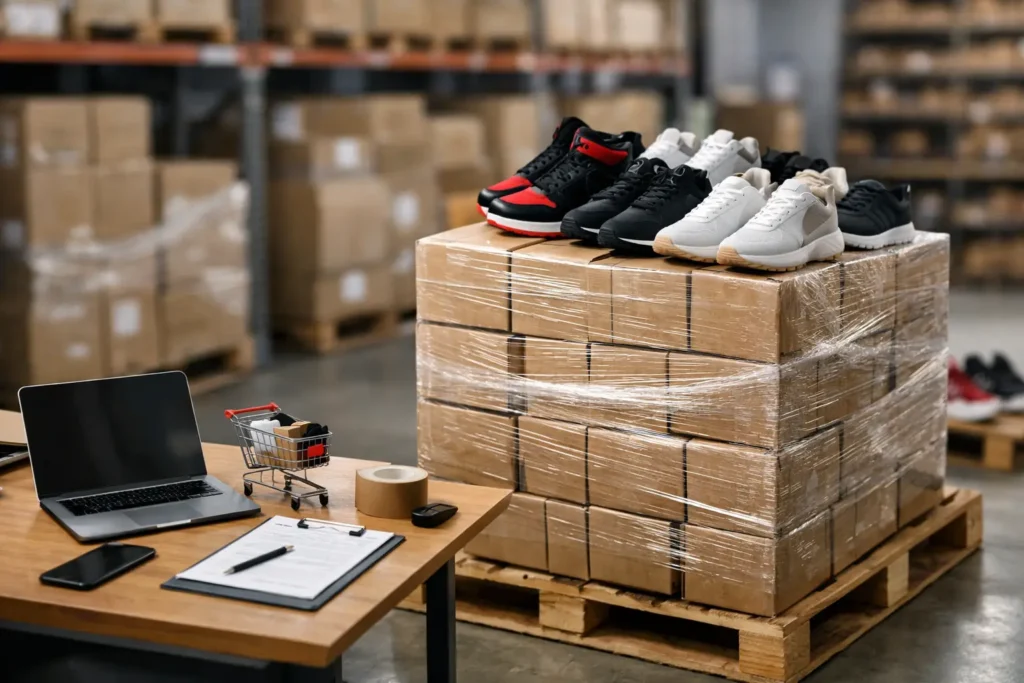
Sneaker inventory can move fast, but only when you buy it at a price that leaves room for freight, selling fees, condition issues, and your own profit. Knowing how to source sneaker pallets online means looking beyond a low pallet price and evaluating the entire deal before you pay. The right lot can stock a resale business for weeks. The wrong one can tie up cash in damaged pairs, slow sizes, or shipping costs you did not plan for.
Start With the Right Sneaker Pallet for Your Sales Channel
Not every footwear pallet fits every reseller. A mixed pallet of athletic shoes, casual sneakers, kids’ footwear, and sandals may work well for flea market sellers, discount stores, and Facebook Marketplace merchants. A cleaner lot with recognizable brands, detailed manifests, and more consistent condition may be a better fit for eBay sellers, online stores, or sneaker-focused resale operations.
Start by deciding where the merchandise will be sold. If you sell locally, you may be able to move mixed styles and open-box pairs quickly at attractive prices. If you sell online, you need to account for photos, listing time, platform fees, returns, and authentication requirements for premium brands. Your buying strategy should match your operating model, not just the deal that looks biggest on screen.
Think about your available capital, too. A smaller box or pallet lets a newer buyer test product categories without overcommitting. Larger pallet orders can lower the per-pair cost, but they also require more storage, more labor, and more cash up front. Truckload buying creates serious volume opportunity, but it is best reserved for buyers who already know how they will process and sell that inventory.
Know What You Are Actually Buying
Liquidation footwear comes from several inventory streams. Each stream has a different risk level, and that difference should show up in the price.
Overstock and closeout merchandise is often the most straightforward. These can be new items that retailers did not sell through, seasonal inventory, discontinued styles, or excess warehouse stock. Shelf pulls may be new or nearly new, but packaging can show wear from store handling. Customer returns create more upside and more work because pairs may be worn, incomplete, mismatched, or missing original boxes.
Before buying, check whether the lot is described as new, like new, untested returns, used, salvage, or mixed condition. Do not treat those terms as interchangeable. A pallet labeled as customer returns should not be priced or resold as clean, new-in-box inventory. Accurate grading protects your reputation and helps you set honest prices from day one.
A quality listing should tell you as much as possible about the lot: estimated unit count, product type, condition, brand mix, retail value, pallet dimensions, and whether a manifest is available. Some mixed lots will not have a complete item-by-item manifest. That can still be a solid buy when the condition category and pricing make sense, but it means you must build more risk into your numbers.
How to Source Sneaker Pallets Online Without Guessing
Online sourcing is convenient because you can compare inventory, lot sizes, and shipping options without spending the day driving between warehouses. It also requires discipline. Photos alone do not tell you whether the lot supports your resale plan.
Use this buying checklist before placing an order:
- Review the condition grade and read every description detail, including notes about boxes, pairs, defects, and mixed merchandise.
- Check whether the lot is manifested, partially manifested, or unmanifested, and understand what information is verified versus estimated.
- Look for actual lot photos when available rather than relying only on generic product images.
- Confirm the number of pallets, estimated pair count, dimensions, weight, and pickup or delivery requirements.
- Ask about shipping timelines, freight quotes, residential delivery options, and liftgate service if you do not have a loading dock.
- Verify the supplier’s business information, order process, payment terms, and customer support availability before sending funds.
The goal is not to eliminate every unknown. Liquidation always includes some variability. The goal is to make sure the unknowns are reflected in your purchase price and resale plan.
Run the Numbers Before You Buy
Retail value is useful for understanding the kind of merchandise inside a lot, but it is not your profit. What matters is your landed cost per sellable pair.
Start with the pallet price. Add freight, taxes where applicable, unloading costs, marketplace fees, packing materials, labor, storage, and an allowance for damaged or incomplete footwear. Then divide that total by the number of pairs you realistically expect to sell, not the maximum unit count listed on the pallet.
For example, a 100-pair pallet may look attractive at $2,500. Once you add $350 in freight and $150 in supplies and handling, your cost is $30 per pair. If you expect 10 pairs to be unsellable or only suitable for clearance, your effective cost rises because the remaining pairs need to carry the deal. That does not make the pallet bad. It tells you what your average selling price must be to create margin.
Avoid assuming every branded sneaker will bring a premium resale price. Brand recognition helps, but size, condition, colorway, season, completeness, and demand matter. Common sizes often sell faster. Kids’ shoes can move well in local markets. Open-box running shoes may be excellent value inventory, while heavily worn returns may require a steep discount or a different sales channel.
Treat Freight as Part of the Inventory Cost
Freight can turn a profitable sneaker pallet into a break-even purchase if you ignore it. Pallets are bulky, and footwear cartons take up space even when individual pairs are lightweight. Ask for the shipping origin, pallet dimensions, total weight, and delivery options before you commit.
Commercial delivery to a business with a dock or forklift is usually simpler than residential delivery. If you are receiving at home, make sure you understand whether the carrier can provide liftgate service. You should also have a safe, dry space ready before the shipment arrives. A pallet left exposed to weather or a missed delivery appointment can create unnecessary problems.
When comparing two lots, compare their landed cost, not just their listed price. A pallet that costs slightly more from a closer source may produce better margins than a cheaper lot with expensive cross-country freight. Buyers across the United States should also consider whether regional demand affects how quickly certain footwear categories sell in their market.
Inspect, Sort, and Price Fast After Delivery
Your profit work begins when the pallet arrives. Inspect the shipment against the order details and photograph the pallet before breaking it down. If you find shipping damage or a major issue, clear documentation gives you a better foundation for contacting the supplier promptly.
Sort pairs into practical selling groups: new in box, new without box, open box, lightly used, used, incomplete, and damaged. Check for matching sizes, correct left and right shoes, excessive wear, odors, sole separation, missing laces, and authenticity concerns. Do not list questionable footwear as premium merchandise just to move it faster. Clear grading and honest descriptions lead to fewer returns and stronger repeat business.
Price the best pairs first. Those listings recover cash quickly and show you which brands, styles, and sizes are getting attention. Bundle slower-moving shoes for local buyers, offer volume discounts to flea market vendors, or create clearance lots rather than allowing lower-value inventory to take over your storage space.
Build a Supplier Relationship, Not a One-Time Buy
The best liquidation buyers do not chase every random deal. They learn which inventory types produce acceptable margins, which condition grades match their labor capacity, and which suppliers communicate clearly. Start with a manageable purchase, track your results, and use that data to make your next buy smarter.
Pallet Liquidation Wholesale Online offers footwear and sneaker liquidation lots in different buying formats, giving resellers room to begin with smaller orders or move into larger volume as demand grows. Before any purchase, ask direct questions about the lot, freight, and condition so you can buy with clear expectations.
Keep a simple record of every pallet: purchase price, freight, pair count, sellable units, average selling price, days to sell, and final margin. After a few purchases, those numbers will show you whether you should buy more athletic footwear, focus on new-condition lots, or shift toward mixed pallets built for local resale. Good sourcing is not about finding a perfect pallet. It is about buying inventory you can turn into cash with confidence.