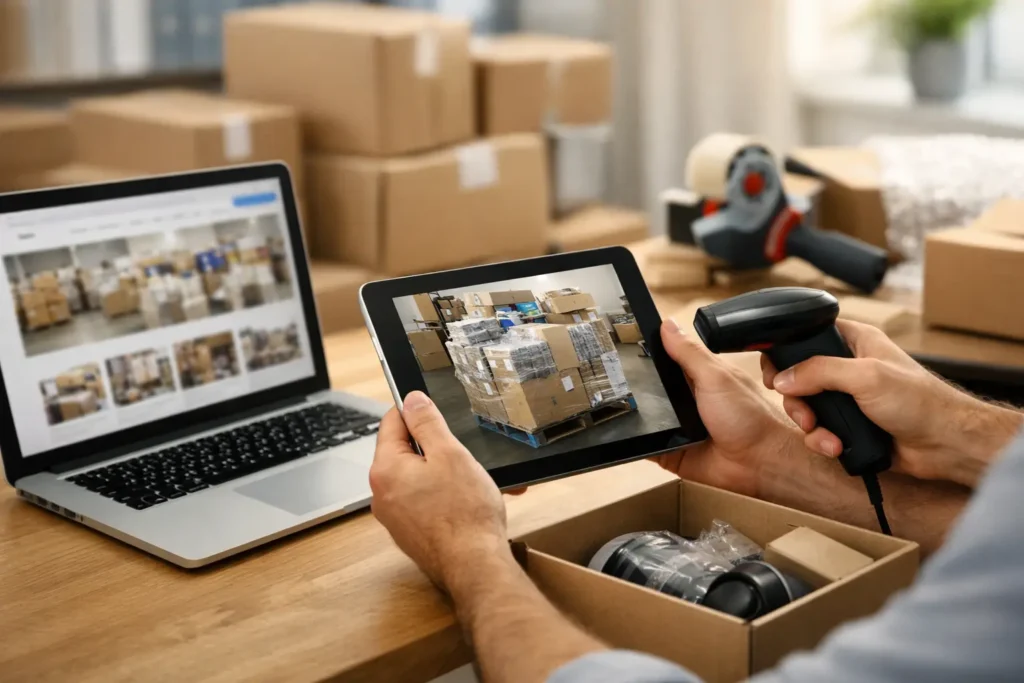
A low pallet price can look like easy profit until freight, item condition, missing accessories, and slow-moving inventory enter the picture. The online liquidation buying process works best when you buy with a resale plan, not just excitement over a deep discount. Whether you sell sneakers, stock a discount store, list on eBay, or flip local inventory through Facebook Marketplace, your profit starts with the information you verify before checkout.
Start the Online Liquidation Buying Process With Your Sales Channel
Do not begin by shopping every available lot. Start with where and how you will sell the merchandise. A footwear pallet can make sense for a sneaker reseller with an established audience, but it may be a poor fit for a general merchandise seller with no way to move mixed sizes. The same is true for electronics, apparel, tools, toys, home goods, and customer returns.
Your sales channel determines what condition level, lot size, and price point you can handle. A local flea market seller may do well with mixed merchandise and open-box goods because shoppers expect deals. An online marketplace seller may need new, shelf-pull, or clearly graded items to protect account performance and avoid return problems.
Before you buy, decide whether the inventory is for fast turnover, higher-margin individual listings, bundled sales, or store replenishment. That decision keeps you from buying a pallet full of merchandise that looks valuable but does not match your customer base.
Know What You Are Buying Before You Pay
Liquidation is not one single condition of merchandise. Each inventory source can have a different reason for liquidation, and that reason affects resale value. Read the listing details closely instead of assuming all branded inventory is new or retail-ready.
Overstock is often excess inventory that was never needed by the retailer. It can offer strong resale potential because products may be new and packaged, though packaging quality can vary. Shelf pulls are items removed from store shelves due to seasonal changes, packaging wear, discontinued styles, or store resets. They are often in good condition, but tags, boxes, or original packaging may not be perfect.
Customer returns carry more risk and can deliver a bigger discount. Some items may be unused, while others may be incomplete, damaged, or non-working. Closeouts and surplus goods can be attractive for buyers seeking quantities of a specific product type, but demand still matters. A closeout item is only a deal if you can sell it.
For footwear and sneaker pallets, check whether shoes are paired, whether original boxes are included, and whether the lot contains a practical mix of sizes. A pallet packed with desirable brands can still be hard to move if most pairs are in extreme sizes or have damaged boxes that matter to your buyers.
Read the Manifest Like a Profit Plan
A manifest is one of the most useful tools in liquidation buying. When available, it may show item descriptions, quantities, retail values, model numbers, UPCs, and sometimes condition information. It gives you a starting point for estimating what is in the lot, but it is not a guarantee of your final sales results.
Use the manifest to research real resale prices. Do not rely only on MSRP. Retail value is useful for understanding the original product position, but it does not tell you what the item sells for now. Search current sold prices on the channels where you actually plan to sell. Consider platform fees, shipping costs, promotions, returns, labor, and the time required to create listings.
If a pallet has 100 units with a stated retail value of $10,000, that does not mean you will collect $10,000. Your realistic recovery may be much lower depending on condition and demand. A better question is: after all costs, what can I reasonably sell this inventory for within 30, 60, or 90 days?
When a manifest is not available, treat the lot as a more speculative purchase. Unmanifested mixed lots can work for experienced buyers who know their category and have enough margin to absorb surprises. First-time buyers should usually choose a smaller, clearly described box or pallet instead of committing a large share of their capital to unknown inventory.
Calculate Your Landed Cost, Not Just the Lot Price
The purchase price is only part of your investment. Landed cost is the full amount it takes to get sellable inventory into your hands. That includes the lot price, buyer fees if applicable, shipping or freight, unloading costs, storage, supplies, marketplace fees, and expected losses from unsellable items.
For example, a pallet priced at $900 may look like a bargain. Add $250 in freight, $75 for unloading and supplies, and a realistic $175 allowance for damaged, incomplete, or slow-moving pieces. Your working investment is now $1,400. If you expect to net $2,100 after selling fees and shipping, your projected profit is $700, not $1,200.
Freight can change the entire deal, especially on pallets and truckloads. Ask for the shipping quote or calculate it before you commit. Confirm whether delivery is to a business address, whether a loading dock or forklift is required, and whether residential or liftgate service adds cost. Buyers who ignore these details often turn a profitable lot into a break-even purchase.
Your target margin depends on category and condition. New branded goods may carry a lower percentage margin but move quickly. Customer returns may offer a larger possible spread, but they require testing, sorting, cleaning, parts replacement, and more time. There is no universal right number. The right margin is the one that covers your risk and leaves enough cash to buy the next lot.
Choose a Lot Size That Matches Your Cash Flow
Buying bigger can reduce your per-unit cost, but volume does not automatically mean better business. A truckload may offer strong value for an established discount store or high-volume reseller with storage, staff, and multiple selling channels. It can overwhelm a newer buyer who has limited space and no system for sorting thousands of units.
Start at the level you can inspect, process, and sell without tying up all your cash. Boxes and smaller lots are useful for testing a category or supplier. Pallets can provide the quantity needed to build consistent inventory. Truckloads make sense when you already understand your sell-through rate, freight requirements, and operational capacity.
Avoid spending every available dollar on the inventory itself. Keep working capital for freight, storage, packing materials, replacement parts, refunds, and the next purchase opportunity. Reselling is a cash-flow business. Inventory that sits too long can prevent you from buying faster-moving products when they become available.
Verify the Supplier and Listing Details
A serious liquidation purchase requires basic due diligence. Review the supplier’s product descriptions, condition terms, payment process, shipping options, and customer support availability. Make sure you understand whether you are buying a specific manifested lot, representative photos, or a general category assortment.
Ask direct questions before placing an order when details are unclear. Confirm the condition grade, number of pallets, approximate weight, shipping origin, manifest availability, and whether the inventory has been tested or inspected. If branded merchandise is involved, ask how the goods were sourced and whether the listing identifies the brand mix accurately.
Also read the sale terms. Liquidation inventory is commonly sold as-is, and that is not automatically a red flag. It simply means you must price the risk into your offer. The key is knowing what as-is means for that specific lot. New overstock sold as-is is a very different purchase from untested customer returns sold as-is.
At Pallet Liquidation Wholesale Online, buyers can choose box, pallet, and truckload opportunities based on budget and resale goals. The smart move is still the same: match the lot description to your selling plan, then confirm the full delivered cost before you buy.
Receive, Inspect, and Turn Inventory Into Sales
The buying process does not end when the shipment arrives. Count the pallets or boxes before the carrier leaves when possible, note visible damage on delivery paperwork, and photograph any freight issues immediately. Move inventory into a clean sorting area and organize it by condition, category, brand, size, or resale channel.
Inspect inventory quickly, but consistently. Separate ready-to-sell items from products that need cleaning, testing, repair, bundling, or disposal. For shoes, pair each unit, check soles and uppers, verify sizing, and sort boxed pairs separately from pairs without boxes. For electronics, test core functions before you list. For apparel, inspect for stains, missing tags, and damage.
Speed matters. The longer inventory stays unsorted, the harder it is to understand your actual recovery rate. List your strongest items first to recover cash early. Bundle low-value products when individual listings would consume too much time, and use local channels for bulky goods that cost too much to ship.
The best liquidation buyers do not chase every cheap lot. They buy inventory they can explain, receive, process, and resell with confidence. Build that discipline into every purchase, and each box or pallet becomes a more controlled opportunity to grow your inventory and protect your margin.