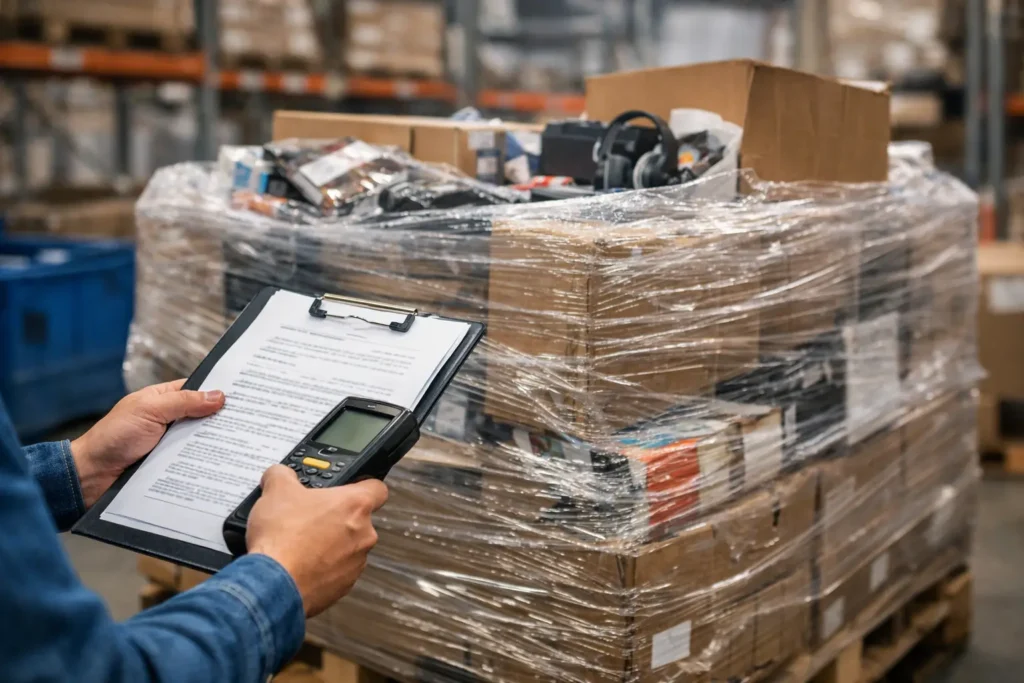
Buying pallet liquidation wholesale online in the USA is one of the easiest ways to stock up on discounted inventory. You get returns, overstock, and shelf pulls from big retailers at a fraction of the retail price.
This guide is for new resellers, eBay and Amazon sellers, flea market vendors, and anyone starting a side hustle with a small budget.
Here’s what we’ll cover:
- How to find trusted online pallet suppliers so you don’t get burned by shady sellers.
- How to pick and check pallets before you buy, so you know what’s actually inside.
- How to budget and calculate your true costs, including shipping and fees, so you keep more profit.
Let’s get into it.
What Pallet Liquidation Means for Buyers
Pallet liquidation is buying returned, overstock, or shelf-pull merchandise in bulk, usually a whole pallet at a time, for a fraction of retail price. You get a mix of products, resell them, and keep the difference. Most buyers pay 10% to 60% of retail, depending on the pallet’s condition and how much you know about what’s inside.
Where Liquidation Inventory Comes From
Big retailers can’t afford to restock or repair every item, so they sell it off fast. Common sources include:
- Customer returns: Unwanted, opened, or lightly used items
- Overstock: Brand-new goods that didn’t sell
- Shelf pulls: Seasonal or discontinued products
- Closeouts: Items from stores that shut down or changed lines
- Damaged packaging: Perfectly fine products with dented boxes
Liquidation companies buy these in huge lots and break them into pallets for resellers.
Why Wholesale Pallets Deliver Big Savings
Buying wholesale cuts out the middlemen. You pay a low per-unit price, and shipping is spread across hundreds of items.
| Item | Retail Value | Typical Pallet Cost per Item |
|---|---|---|
| Small appliance | $80 | $15–$30 |
| Apparel | $30 | $4–$10 |
Sell even at half of retail, and your margins can look pretty great.
Customer Returns vs. Overstock vs. Shelf Pulls
| Type | Condition | Risk | Margin |
|---|---|---|---|
| Customer returns | Mixed: some new, some damaged | High | High |
| Overstock | Brand new, unused | Low | Moderate |
| Shelf pulls | Slightly dated or shopworn | Medium | Moderate |
Beginners usually do best with overstock. Returns can pay off big once you know how to test and repair items.
Mixed Category vs. Single Category Pallets
- Mixed: Cheaper and full of surprises, but harder to sort and price.
- Single category: Easier to list, price, and sell in bulk. You pay a bit more for the predictability.
Start with single category if you want fewer headaches.
Graded vs. Ungraded Inventory
- Graded: Sorted by condition (A, B, C, salvage). You know roughly what you’re getting, so the price is higher.
- Ungraded: Cheaper, but you’re gambling on what’s inside.
Look for a clear manifest either way.
Best Categories for Resale Profit
- Small electronics and accessories: Fast turnover.
- Home and kitchen: Steady demand.
- Tools and hardware: Hold value well.
- Apparel and shoes: Great margins if brands are recognizable.
- Toys and sporting goods: Seasonal spikes.
Top Online Liquidation Marketplaces and Auctions
Top Online Liquidation Marketplaces and Auctions
These are the easiest places to start because they’re big, searchable, and beginner-friendly:
- B-Stock: Hosts auctions from Amazon, Target, Walmart, and Costco.
- Liquidation.com: Offers pallets and truckloads in many categories.
- BULQ: Sells smaller lots with manifests, which helps beginners.
- DirectLiquidation: Sells Walmart, Target, and Best Buy overstock and returns.
Direct Liquidators and Retailer Programs
Going direct often means better pricing and fewer middlemen.
- Amazon Liquidation Auctions: Sold through approved partners.
- Retailer programs: Many big-box stores sell through set liquidators, so check their corporate sites.
- Local liquidation warehouses: Many let you inspect pallets in person and buy without bidding.
Key Signs of a Reliable Seller
- Detailed manifests with item-level data
- Clear condition grades (new, open box, salvage)
- Real buyer reviews and a long track record
- Transparent fees, shipping quotes, and return policies
- Responsive customer support
Red Flags and Scams to Avoid
- Prices that seem too good to be true
- No manifest, or vague “mystery” pallets with no details
- Payment only by wire, Zelle, or gift cards
- No business address, phone number, or ve
- rifiable reviews
- Stock photos only, with no real pallet images
- Pressure to buy right now
Always verify the seller before you send money.
Reading Manifests and Product Descriptions
A manifest is your best friend. It lists every item, quantity, and retail price. Look for:
- Item-level detail: Brand, model, UPC, and quantity. Vague lines like “assorted housewares” are a red flag.
- Category mix: A few high-ticket items shouldn’t carry the whole pallet.
- Duplicates: Ten of the same item is easier to sell than ten random ones.
If a seller won’t share a manifest, skip it.
Checking Condition Grades and Retail Value
Condition changes everything. Here’s a quick guide:
| Grade | What It Means | Typical Cost (% of retail) |
|---|---|---|
| New/Overstock | Unused, sealed | 20–40% |
| Open Box | Opened, likely complete | 15–30% |
| Customer Returns | Mixed, may need testing | 8–20% |
| Salvage | Damaged or parts only | 3–10% |
Also check whether the listed retail value is MSRP or current market price. MSRP can be inflated on older products, so compare against Amazon or eBay prices.
Estimating Resale Value and Profit Margins
Check sold listings on eBay for real prices, not asking prices. Then run this math:
- Resale estimate: Add up what items realistically sell for.
- Subtract costs: Pallet price, shipping, fees (10–15%), and packaging.
- Allow for losses: Assume 10–20% of items are unsellable.
Aim for at least 40–50% profit margin after costs. If the numbers are tight, walk away.
Pallet Price vs. Total Landed Cost
The sticker price is just the start. Your landed cost is everything you pay to get goods sitting in your space, ready to sell. Divide that total by the number of sellable items to find your real cost per unit.
Shipping, Freight, and Delivery Fees
Freight can eat up 10–30% of a cheap pallet’s price. Watch for:
- LTL freight: Often $100–$400+, depending on distance and weight.
- Liftgate service: Needed with no loading dock, usually $50–$100.
- Residential delivery surcharges: Extra fees for home addresses.
- Local pickup: Saves money, but you’ll need a truck or van.
Get a freight quote before you bid or buy.
Taxes, Fees, and Hidden Expenses
Small costs add up quick:
- Buyer’s premium on auction sites (often 5–15%)
- Sales tax, unless you have a resale certificate
- Marketplace fees (eBay, Amazon, Facebook)
- Payment processing (about 3%)
- Storage, packaging, and cleaning supplies
- Disposal of junk or unsellable items
Setting a Realistic Profit Goal
Assume 10–20% of a pallet will be unsellable or damaged. Aim for a gross margin of at least 40–50% after all costs.
| Item | Example |
|---|---|
| Pallet + fees | $800 |
| Freight | $150 |
| Total cost | $950 |
| Expected resale | $2,000 |
| Net after fees (~15%) | ~$1,700 |
| Profit | ~$750 |
Run numbers conservatively, and you’ll avoid nasty surprises.