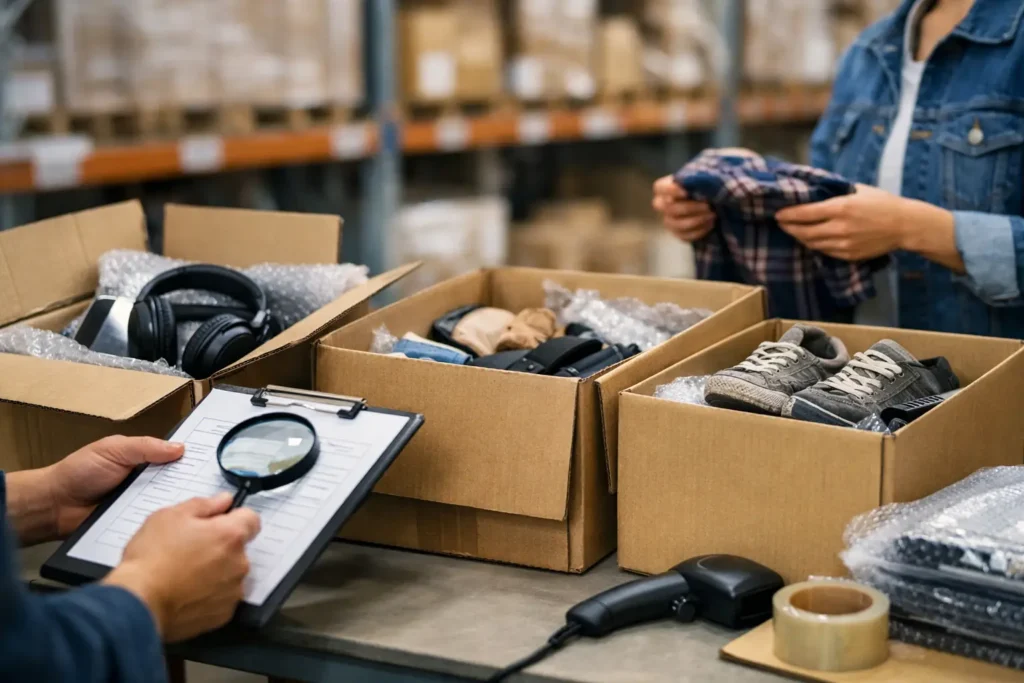
A pallet marked “customer returns” can be a strong profit buy or a costly sorting project. The difference is rarely the sticker price alone. This guide to liquidation inventory grading helps resellers understand what they are actually buying before they commit cash, freight, labor, and storage space to a lot.
Grading is the language used to describe a liquidation lot’s expected condition. It gives you a starting point for estimating resale value, but it is not a guarantee that every item will match one condition level. Smart buyers read the grade, inspect the available details, calculate their downside, and buy only when the likely margin supports the risk.
What Liquidation Inventory Grading Really Means
A liquidation grade describes the general condition of merchandise in a box, pallet, or truckload. It may reflect whether goods are new, shelf pulled, returned by customers, damaged, untested, or mixed. The grade should influence how you price the lot and where you plan to resell it.
One key rule: grading is not perfectly standardized across every retailer, warehouse, or supplier. A “Grade A” lot from one source may not look identical to Grade A inventory from another. Some suppliers use broad labels, while others provide manifests, photos, testing notes, return rates, or condition breakdowns. Treat the grade as useful business information, not as a substitute for due diligence.
For footwear and sneaker pallets, condition can affect value fast. A pair may be new but have a damaged box. Another may be a customer return with light wear, missing laces, or a mismatched size. Each issue changes the right resale channel and price point.
Guide to Liquidation Inventory Grading Terms
Most lots fall into a handful of common condition categories. Knowing the practical resale meaning behind each label will keep you from paying new-in-box money for inventory that belongs in a clearance bin.
New Overstock and Surplus
Overstock consists of merchandise that was never sold through the original retailer. It is often new, unused, and may include original packaging, tags, or labels. Surplus and closeout goods can fall into this category as well, especially when a retailer clears seasonal products, discontinued styles, or excess inventory.
This is usually the easiest inventory to sell online because condition questions are limited. It can also command the highest buy price. Your job is to avoid overpaying just because the merchandise is new. Check current market demand, not only the original MSRP. A $120 shoe that is routinely discounted to $45 does not create a $100 resale opportunity.
Shelf Pulls
Shelf pulls are products removed from store shelves or retail stockrooms. They are generally unused, but packaging may show price stickers, scuffs, tape, damage, or handling wear. Apparel may have been tried on. Footwear boxes may be crushed, marked, or missing even when the shoes are clean and unworn.
Shelf pulls can be excellent value for discount stores, flea market sellers, and online merchants who accurately describe box condition. They are often a better bet than returns when you need predictable inventory without paying top dollar for pristine retail presentation.
Customer Returns
Customer returns are items sent back after purchase. Some are unopened and fully functional. Others may have been used, damaged, swapped, or returned with missing parts. This category offers strong upside because the purchase cost is lower, but it demands more sorting, testing, and honest listing practices.
Do not assume every return is defective. A shopper may return shoes because of fit, color, or a late delivery. At the same time, do not assume every pair is resellable as new. Plan for a percentage of items needing cleaning, repair, bundling, parts harvesting, liquidation, or disposal.
Tested and Untested Merchandise
These terms matter most in electronics, appliances, tools, and other functional products. Tested inventory has been checked to some stated level, such as powering on or passing a basic function test. Untested merchandise has not been verified. It may work perfectly, fail completely, or be missing necessary accessories.
Untested lots should carry a lower buy price because your labor and failure rate will be higher. If you do not have a process for testing, repairing, and handling returns, an untested electronics pallet may create more headaches than profit.
Salvage and Damaged Goods
Salvage inventory may have major damage, missing components, heavy wear, broken packaging, or uncertain functionality. It is not automatically worthless. Experienced buyers can profit from parts, repairs, outlet sales, or bulk clearance channels. But this is not the right starting point for a new reseller who needs dependable, ready-to-list merchandise.
Buy salvage only when you have a specific recovery plan. “Cheap” is not a plan. Know who will buy the inventory, what condition they accept, and what it will cost to process the items that cannot be sold.
Grade Is Only One Part of the Deal
A condition label tells you something about risk, but it does not tell you everything. A profitable liquidation purchase depends on product mix, brand recognition, sizes, seasonality, completeness, and current demand.
A pallet of Grade B branded sneakers with popular sizes can outperform a pallet of Grade A unknown footwear. Likewise, a new pallet of last year’s holiday merchandise may move slowly if you buy it in the wrong season. The best lot is not always the cleanest lot. It is the lot you can turn into cash at a margin that justifies the work.
When a manifest is available, review it closely. Look for item quantities, model numbers, sizes, retail values, and category concentration. Retail value is useful for context, but it should never be your main profit calculation. Use realistic resale prices based on your sales channel and inventory condition.
Price the Risk Before You Buy
Your total cost is more than the pallet price. Add freight, unloading, storage, labor, cleaning supplies, testing time, marketplace fees, packing materials, and expected losses. Then calculate your maximum acceptable cost per sellable unit.
For example, a 100-pair footwear pallet may look affordable at $1,500. After freight and handling, your landed cost may reach $1,800. If you expect 85 pairs to be clean, complete, and sellable, your actual cost is about $21 per sellable pair before marketplace fees and labor. That can work well if the pairs reliably sell for $45 to $60. It can fail quickly if the market only supports $25.
Use conservative assumptions on return-heavy lots. If you think 10 percent may be unsellable, model 15 to 20 percent until you have experience with that source and category. A cautious estimate protects your cash flow. If the lot performs better than expected, that becomes extra margin instead of a rescue mission.
How to Inspect a Lot Description Like a Buyer
Before checkout, read every available detail. Photos, manifests, condition notes, item counts, and category descriptions all matter. Ask whether the lot is sorted or mixed, whether items are sold as-is, and whether packaging condition is included in the grade.
Pay attention to vague phrases such as “may include,” “assorted,” and “no guarantee.” These are not automatic deal-breakers, but they signal that the lot has more variability. Price that variability into your offer. If no manifest is provided, you should expect a lower level of predictability and buy accordingly.
For shoes, check whether the lot is paired by size, whether original boxes are included, and whether the listing identifies brands or only provides a general category. For electronics, determine whether chargers, remotes, batteries, and cables are likely to be included. Missing accessories can turn otherwise good products into slow-moving inventory.
Match the Grade to Your Resale Channel
Your sales channel should determine what grade you buy. New overstock and clean shelf pulls are usually the strongest fit for online listings where buyers expect clear photos and accurate condition details. Customer returns can work well for discount stores, local markets, live selling, and bundle deals where value pricing moves volume.
Salvage and untested inventory are better for buyers with repair skills, parts buyers, or established outlet operations. If you are new to liquidation, start with a manageable box or smaller pallet of inventory you understand. Learn your true sell-through rate, labor time, and customer expectations before scaling into mixed truckloads.
Pallet Liquidation Wholesale Online offers lot sizes that let resellers start where their budget and processing capacity make sense. The goal is not to buy the largest load available. The goal is to buy inventory you can inspect, price, list, and move profitably.
Keep Grading Notes for Every Purchase
Build your own grading record as you process inventory. Track the supplier description, what arrived, how many units were sellable, how many needed work, and what actually sold. Over time, this turns broad grading terms into numbers that matter to your business.
You may find that shelf pulls consistently deliver your best return because they require less labor, even if the initial cost is higher. Or you may discover that customer-return footwear produces better margins because your local buyers accept minor box damage. There is no single best grade for every reseller.
Buy the grade that fits your sales channel, your labor capacity, and your risk tolerance. When the condition is clear, the landed cost is realistic, and the resale plan is already in place, liquidation inventory stops being a gamble and becomes inventory you can work.