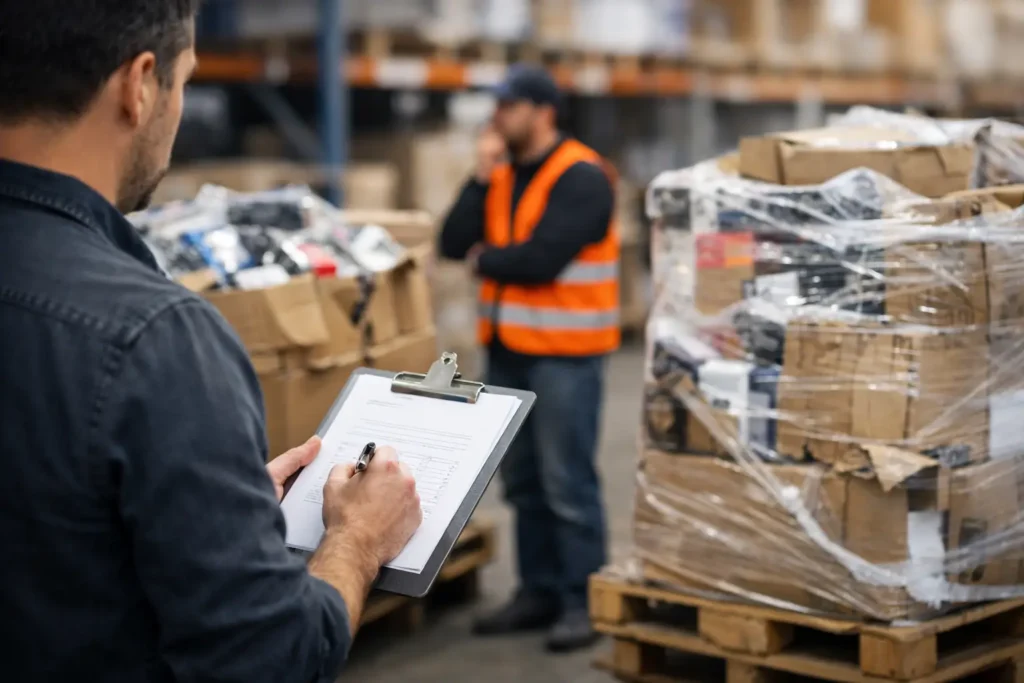
A pallet that looks cheap can become expensive fast when the supplier cannot prove what is in it, where it came from, or how it will get to your door. Knowing how to avoid bad liquidation suppliers protects more than your purchase price. It protects your resale time, freight budget, customer reputation, and cash flow.
Liquidation is not risk-free, and any supplier promising guaranteed retail-ready merchandise at rock-bottom pricing deserves a closer look. Overstock, shelf pulls, closeouts, and customer returns all have different condition profiles. A dependable supplier explains those differences clearly, gives you enough information to buy intelligently, and does not pressure you to send money before basic questions are answered.
Know What You Are Buying Before You Judge the Price
Bad suppliers often sell confusion. They use broad labels such as “Amazon pallets,” “mixed merchandise,” or “brand-name returns” without explaining the lot condition, item count, category mix, or whether a manifest is available. The price may look like a deal, but a vague listing gives you no real way to estimate resale value.
Start by matching the inventory type to your sales channel. If you sell sneakers, footwear, or apparel through online marketplaces, you need to know sizing, brand mix, condition, and whether pairs are complete. If you run a discount store or flea market booth, a mixed general merchandise pallet may work, but only if the cost leaves room for unsellable items, labor, and local delivery.
A good supplier will tell you whether merchandise is overstock, shelf pulls, returns, salvage, closeouts, or a mixture. These terms are not interchangeable. Overstock is often unused inventory, while customer returns can range from unopened items to products with missing parts, wear, or damage. Do not treat a return pallet like new retail inventory just because recognizable brands are mentioned.
Red Flags That Signal a Bad Liquidation Supplier
You do not need to investigate every supplier like a detective, but you should slow down when the details do not add up. Watch for these common warning signs before placing an order:
- Prices that are dramatically below every comparable liquidation lot, especially for high-demand brands, electronics, or sneakers.
- Product photos that look copied, generic, blurry, or unrelated to the actual pallet being sold.
- No clear business identity, physical location, support contact, invoice process, or documented shipping terms.
- Pressure to pay immediately through unprotected payment methods, cryptocurrency, gift cards, wire transfers to a personal name, or apps with no buyer protection.
- Claims of “100% new,” “no returns,” or guaranteed profits on liquidation merchandise without supporting documentation.
One red flag does not always mean fraud. A new supplier may have limited online reviews, for example. But several red flags together are a reason to walk away. The inventory business moves quickly, but real opportunities do not disappear simply because you asked for a manifest, freight quote, or invoice.
How to Avoid Bad Liquidation Suppliers With Better Verification
Before you buy, verify the supplier and the specific lot. Those are two separate checks. A legitimate company can still have a lot that is not right for your business, and an attractive manifest does not make an unverified seller trustworthy.
First, look for a consistent business presence. The company name, phone number, support email, payment instructions, and shipping process should line up. Call the number and ask direct questions. Can they explain the inventory condition? Do they sell by box, pallet, and truckload? Can they confirm whether pickup, freight, or local delivery is available? A real sales team should be able to discuss the basics without dodging every question.
Next, ask for lot-specific details. Depending on the merchandise, that may include a manifest, estimated item count, pallet dimensions, total weight, condition grade, photos of the actual load, and any known exclusions. For footwear pallets, ask about pair completion, size range, box condition, visible wear, and whether the lot includes singles or mismatched pairs. For electronics, ask whether products are tested, untested, locked, incomplete, or sold for parts.
A manifest is useful, but it is not a guarantee. It may reflect estimated quantities, original retail values, or supplier data that changes during processing. Use it as a pricing tool, not a promise. If a supplier gives you a manifest showing $20,000 in retail value for a $1,500 pallet, focus on what you can realistically sell, not the largest number on the page.
Calculate Resale Margin the Conservative Way
The fastest way to lose money in liquidation is to base your purchase on retail price. Retail value is a reference point, not your revenue. Your real number is the amount buyers in your market will pay for the merchandise in its actual condition.
Build your estimate from conservative resale values. Check what comparable products move for through your normal channels, then reduce that number for missing packaging, open-box condition, damaged items, slow-moving sizes, marketplace fees, storage, listing labor, and returns. Add the full landed cost: inventory price, buyer fees if any, freight, unloading, supplies, and labor.
For example, a $1,200 pallet with $350 freight is not a $1,200 buy. It is a $1,550 buy before you have inspected, sorted, photographed, or sold one item. If 15 percent of the load is damaged or unsellable, your remaining inventory has to carry that loss. That does not make the lot bad. It means your margin has to be wide enough to absorb normal liquidation risk.
The right lot depends on your model. A high-volume bin store may accept more mixed condition inventory than an eBay seller who needs individually listable products. A truckload can lower your per-unit cost, but it can also tie up capital, warehouse space, and labor. Buy for the business you operate now, not the business you hope to have after one lucky pallet.
Get Freight and Payment Terms in Writing
Freight confusion causes many avoidable disputes. Ask whether shipping is included, quoted separately, or billed after purchase. Confirm whether delivery is curbside, dock delivery, liftgate service, terminal pickup, or warehouse pickup. If you do not have a loading dock or forklift, that detail matters.
Request the pallet count, weight, dimensions, origin location, and delivery estimate before paying. Freight rates can change based on distance, residential delivery, appointment requirements, and accessorial charges. A supplier who cannot explain the shipping process is creating risk you may end up paying for later.
Payment terms matter just as much. Use a method that creates a clear transaction record and pay only after you receive an invoice that identifies the seller, lot, purchase amount, and shipping terms. Keep emails, invoices, photos, manifests, and payment receipts in one file. If a problem comes up, documentation gives you a much stronger position than a text-message agreement.
Start Small, Then Scale What Works
If you are buying from a supplier for the first time, a smaller box or pallet can be a smart test. It gives you a chance to evaluate communication, loading accuracy, freight handling, condition grading, and actual resale performance without committing your entire inventory budget.
When the order arrives, inspect it quickly. Take photos before breaking down the pallet, compare the contents with the listing or manifest, and document obvious damage. Track how many items are sellable, how long they take to move, and what you actually net after fees. This is the data that tells you whether to reorder, change categories, or move on.
Pallet Liquidation Wholesale Online is built for buyers who need flexible lot sizes, from smaller resale-ready purchases to larger wholesale inventory orders. Still, the same rule applies with any supplier: buy the documentation, condition information, and landed margin, not just the discount.
The best liquidation suppliers make it easier to ask hard questions because they expect serious resellers to protect their money. Take the extra hour to verify the seller, price the lot conservatively, and confirm freight before you pay. That discipline gives you a better chance to turn inventory into repeatable profit instead of an expensive lesson.