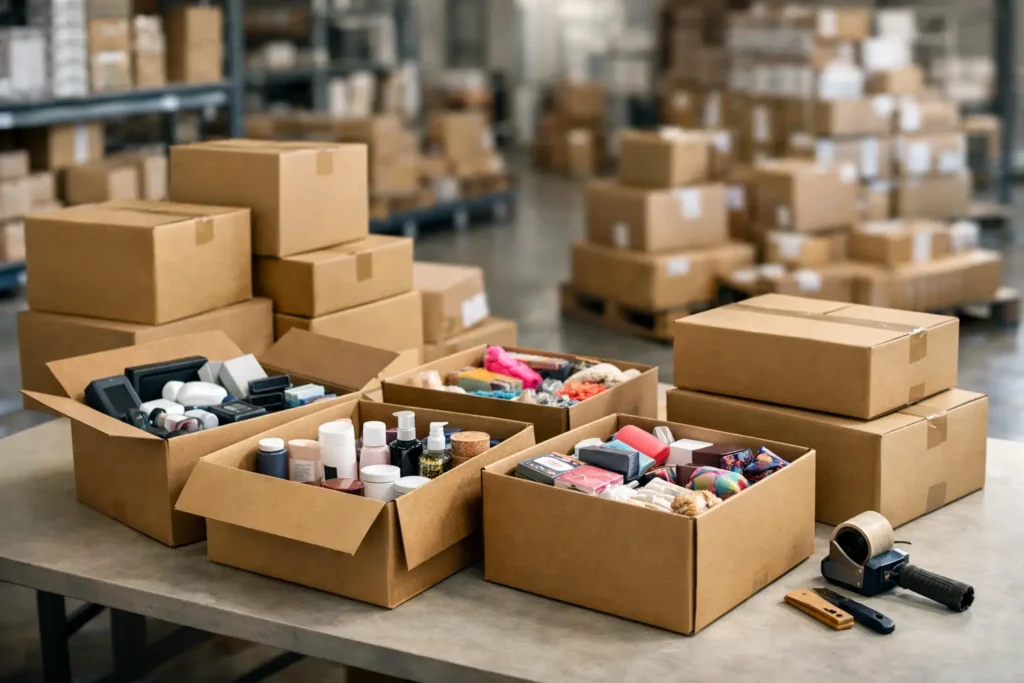
Your first liquidation purchase should not be the biggest deal you can afford. It should be the lot you can inspect, list, price, and sell without tying up all your cash. The best wholesale boxes for beginners are usually smaller, clearly described lots with familiar merchandise and a condition level you can realistically handle.
A low buy price matters, but it is only one part of the deal. Your real margin depends on what arrives, how much work it needs, where you can sell it, and how quickly it moves. Start with boxes that give you room to learn the business without turning one purchase into a costly guessing game.
What Makes a Wholesale Box Beginner-Friendly?
A beginner-friendly wholesale box has three things: a manageable quantity, a category you understand, and enough information to make a smart buying decision. You do not need a perfect lot. Liquidation inventory is sold at a discount because it may include mixed sizes, open-box items, shelf pulls, customer returns, or packaging wear. You do need a lot where the risk matches your budget and selling ability.
Smaller boxes are easier to sort and store than a pallet. They also let new resellers test a category before committing to a larger order. If you have never sold footwear, for example, a mixed footwear box lets you learn how to check pairs, match sizes, photograph condition, and identify which brands sell in your market.
Look for merchandise with a resale path you already have access to. A seller with a busy Facebook Marketplace account may do well with practical household goods. An eBay seller may prefer branded shoes, apparel, tools, or electronics with clear model numbers. A flea market vendor may need inexpensive, fast-moving basics that shoppers can inspect in person.
Best Wholesale Boxes for Beginners: Start With Condition
Condition is where many first-time buyers either protect their margin or lose it. Read the inventory description carefully before focusing on retail value. A box advertised with a high original retail total can still be a poor fit if most items require testing, repair, missing-part research, or difficult returns handling.
Overstock and shelf pulls
Overstock and shelf pulls are often the safest entry point. Overstock generally refers to excess inventory that was never needed at retail. Shelf pulls are items removed from store shelves, often because of season changes, packaging updates, discontinued assortment, or store resets.
These lots may have stickers, minor packaging damage, mixed sizing, or display wear, but they are often closer to retail-ready condition than customer-return inventory. They work well for beginners selling apparel, footwear, health and beauty products, accessories, home goods, and seasonal merchandise.
The trade-off is simple: cleaner inventory usually costs more than untested returns. That can be worth it when you are learning to price, list, and ship products. A slightly higher cost per item is often better than buying cheap inventory that sits in your garage because it needs too much work.
New footwear and sneaker boxes
Branded footwear can be a strong category for beginning resellers because each pair has a size, brand, style, and comparable resale market. Buyers understand what they are getting, and listings are easier to create than listings for random mixed merchandise.
A footwear box is especially useful if you can sell across local marketplaces, eBay, independent retail, or sneaker resale channels. Check whether pairs are new, whether original boxes are included, whether sizes are mixed, and whether the lot contains singles or mismatched pairs. A low price does not help if you cannot sell a left shoe without its match.
Start with styles and brands that have broad demand rather than chasing one flashy name. Everyday athletic shoes, work shoes, kids’ footwear, sandals, and recognizable casual brands can create steadier sales than a box built around a trend you do not know how to price.
Customer returns
Customer-return but they are not always the best first purchase. Items may be unused, lightly used, incomplete, damaged, or nonworking. A return lot can be profitable when you know how to test products, replace basic parts, bundle accessories, and sell condition honestly.
For a first buy, choose returns only if the category is easy to inspect. Small appliances, toys, home goods, and tools can work if you have time and a basic testing setup. Avoid jumping into complex electronics, large appliances, or high-ticket products that may require advanced diagnostics. The potential margin is real, but so is the risk of unsellable inventory.
Choose One Category Before You Buy Mixed Lots
Mixed general merchandise boxes look exciting because they contain a little of everything. For a beginner, that variety can become a problem. You may end up researching ten categories, finding ten different buyer types, and storing items that do not fit the same sales channel.
Starting with one focused category makes the work faster. You learn the demand, common defects, shipping cost, and realistic selling price. You also get better at spotting value on your next purchase.
Consider your current setup. If you have limited storage, avoid bulky home goods. If you do not want to ship fragile items, skip glass and breakable décor. If you sell locally, larger items may be profitable because buyers can pick them up. If you rely on online marketplaces, compact items with easy shipping are usually more practical.
The right box is not the one with the highest stated retail value. It is the one you can turn into cash with the least friction.
Check the Numbers Before You Commit
Do not calculate profit by subtracting the box price from the suggested retail price. Retail price is a reference point, not your resale price. Your numbers should be based on completed sales or realistic local pricing for comparable items in similar condition.
Before buying, build a simple working estimate. Add the box cost, shipping or freight, sales tax where applicable, marketplace fees, payment processing fees, packing materials, and a small allowance for damaged or unsellable items. Then divide that total by the number of items you believe you can sell. That gives you a more useful cost per sellable unit.
For example, a $300 box with $75 shipping may look like a $300 deal, but your starting inventory cost is $375 before fees and supplies. If 25 of 30 items are sellable, your effective cost is $15 per sellable item, not $12.50. That number tells you whether your expected sale prices leave enough room for profit.
Do not expect every item to be a winner. Build your first purchase around a realistic recovery rate. A few slow sellers, damaged packages, or low-value pieces are normal in liquidation. The goal is for the profitable items to cover the entire investment and leave margin after expenses.
Questions to Ask Before Ordering Your First Box
Good sourcing starts with clear questions. Before placing an order, confirm the condition category, the approximate item count, whether a manifest is available, and whether the photos represent the actual lot or a sample. If you are buying footwear, ask about matched pairs, size range, original boxes, and brand mix.
Also confirm shipping details. A box purchase may be easier to receive than freight, but you still need to know the delivery cost, delivery location requirements, and expected timeline. If you are working from home, make sure the shipment size fits your space and your ability to move it.
Use this short decision check before you pay:
- Can I explain exactly where I will sell most of these items?
- Can I inspect and list this inventory within a week or two?
- Does the all-in cost leave room for fees, discounts, and a few bad units?
- Do I understand the stated condition and the risk that comes with it?
If the answer is no to more than one of these questions, choose a smaller or simpler lot. There will always be another deal. Protecting your buying capital gives you the ability to take the next opportunity.
Build Up From Boxes to Pallets
Boxes are not just a low-cost way to start. They are a testing tool. Track what sells, how long it takes to sell, average selling price, condition issues, and customer questions. After two or three purchases, you will see patterns that should guide your next order.
When a category sells consistently, moving up to a pallet can lower your cost per item and give you more inventory to work with. But scale only after your process is working. A pallet multiplies the opportunity and the mistakes. Storage, freight, labor, and slow-moving items all become more expensive at higher volume.
Pallet Liquidation Wholesale Online offers box, pallet, and truckload options so buyers can match inventory size to their current budget and selling capacity. Begin with the format you can manage, then increase volume when your sales data proves the demand.
Your first box does not need to make you an expert overnight. Buy a category you can understand, price it with discipline, list it quickly, and pay attention to what customers actually buy. That is how a small box becomes a repeatable resale business.