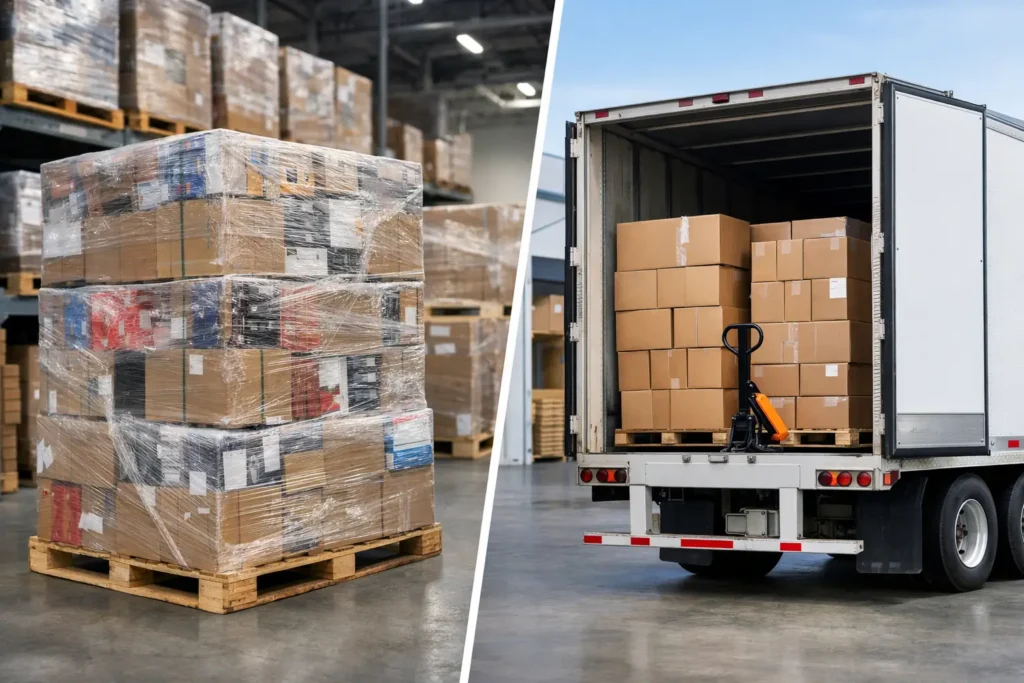
A $2,000 pallet can be the inventory move that gets a new reseller selling this week. A $20,000 truckload can supply a discount store for months. The right choice is not about buying the biggest deal available. With pallets versus truckloads for resale, the winning format is the one your cash flow, storage space, labor, and sales channels can handle without cutting into your margin.
The real difference is control versus volume
Pallets give you a contained buying opportunity. You receive a manageable quantity of liquidation merchandise, usually with lower freight exposure and a smaller upfront commitment. That makes pallets practical for eBay sellers, Facebook Marketplace sellers, flea market vendors, sneaker resellers, and smaller shops that need fresh inventory without tying up all their capital.
Truckloads are built for volume. One purchase may include dozens of pallets and thousands of units, creating a lower cost per piece and a much larger selling opportunity. But volume does not automatically mean better profit. It also means more money committed before sales happen, more product to sort, and a greater need for storage, staff, and a plan for slower-moving items.
The better question is not, “Which format is cheaper?” Ask, “How much inventory can I process and sell before it becomes a burden?” A lower unit cost only helps when merchandise keeps moving.
When pallets are the better resale purchase
A pallet is often the smart first step for buyers building their liquidation business or testing a new category. It limits the downside of a bad product mix while still giving you access to below-retail merchandise. If you are learning how to inspect returns, identify shelf pulls, price open-box goods, or sell footwear by size, smaller lots help you build experience without taking on a warehouse-sized problem.
Your budget needs room for more than inventory
The purchase price is only one part of the deal. You may also need to cover freight, unloading, storage, listing supplies, marketplace fees, labor, and potential repairs or cleaning. A pallet leaves more working capital available for those expenses.
That flexibility matters when your sales cycle is uncertain. For example, a mixed footwear pallet may contain recognizable brands with strong resale potential, but individual sizes, box condition, and seasonality will influence how quickly each pair sells. With a pallet, you can sort the goods, learn what moves through your channels, and reinvest the proceeds into the next buy.
You sell through flexible channels
Pallets fit sellers who move merchandise one item at a time or in small bundles. Online marketplace merchants can photograph and list higher-value pieces individually. Local sellers can separate goods into price points for pop-up events, flea markets, or Facebook Marketplace. Small discount stores can refresh shelves without crowding their back room.
Pallet buying also works well when you want category focus. A footwear pallet, for instance, may be easier to price and market than a broad general merchandise load. Category knowledge gives you an edge because you understand brands, sizes, demand, and likely resale ranges.
You need to protect against unknowns
Liquidation inventory can include overstock, shelf pulls, closeouts, customer returns, or surplus goods. Each condition type carries a different level of predictability. Even when a manifest is available, actual resale results depend on condition, completeness, packaging, and demand in your market.
A pallet does not remove that risk, but it contains it. If an assortment has more used, incomplete, or lower-demand merchandise than expected, you are managing one lot instead of a full trailer of it. That is a major advantage for buyers who are still developing their inspection and sales process.
When truckloads make more sense for resale
Truckloads are for buyers with proven demand and the ability to turn inventory at scale. If you run a discount store, operate multiple locations, supply other resellers, sell at high-volume markets, or have an established online team, a truckload can give you the consistency and buying power that smaller lots cannot match.
Scale can improve your cost per unit
A truckload generally spreads freight and sourcing costs across far more units. That can reduce your landed cost per item and create room for competitive retail pricing. For a business that already knows how to sell a category, that margin room can be substantial.
The key word is “can.” A truckload only improves economics if your operation is ready for it. If half the load sits untouched for six months, your money is trapped in inventory. Storage costs, labor, damage, and markdowns can erase the advantage of buying at a deeper discount.
You have space, unloading access, and labor
Before buying a truckload, confirm where it will go and how it will come off the trailer. Many loads require a commercial receiving location, loading dock, forklift access, or a clear plan for liftgate service and unloading. Do not assume a residential driveway, small storage unit, or crowded storefront can receive a large shipment safely.
You also need people and time. A truckload can require days or weeks of sorting, testing, cleaning, pricing, bundling, and moving merchandise onto the sales floor. That work is part of your cost. Buyers who underestimate processing time often end up surrounded by product they cannot list or display fast enough.
Your sales data supports the volume
The strongest truckload buyers do not buy based on excitement alone. They know what sells, what takes too long to sell, and what price range their customers will accept. They may have past performance from similar pallets, existing customers waiting for inventory, or reliable outlets for lower-value goods.
If your store sells branded footwear quickly, a larger footwear lot may be a logical next move. If your sales are inconsistent and your storage is limited, buying more of the same uncertainty is rarely the answer. Build the proof at pallet level first, then scale when the numbers support it.
Compare landed cost, not just the advertised price
The best way to compare pallets versus truckloads for resale is to calculate landed cost. That means the total cost to get inventory ready to sell, not just the amount shown on the invoice.
Start with the lot price and add freight, unloading, storage, labor, packaging, repairs, and marketplace fees. Then estimate how many units are realistically sellable. Do not use original retail value as your expected revenue. Retail price is a reference point, not a guarantee that an item will sell at that amount.
Next, estimate your average selling price based on your actual channel. A pair of branded shoes may sell differently in a local discount store than it does through an online marketplace after shipping and fees. A truckload may have a lower landed cost per item, but a pallet may produce a better return on cash because you can sell through it quickly and reorder more often.
What to verify before you buy
Whether you choose one pallet or a full truckload, get clear on the lot before committing. Ask about merchandise category, condition type, whether a manifest is available, the estimated unit count, pallet count, shipping origin, and fulfillment requirements. Review photos carefully, but understand that photos show examples and cannot replace a clear understanding of the lot description.
For customer returns, be prepared for a wider condition range than overstock or shelf pulls. For unmanifested mixed goods, your upside may be higher, but so is the sorting and pricing work. If a lot is marked as tested, understand what that testing means. If it is sold as-is, build room into your numbers for items that need parts, cleaning, bundling, or liquidation at a lower price.
At Pallet Liquidation Wholesale Online, buyers can choose lot sizes that match the stage of their business instead of forcing a truckload purchase before they are ready. That matters because the right inventory format should support your growth, not strain it.
Make your next purchase match your operating capacity
Choose pallets when you need controlled risk, fast learning, and inventory that fits your current budget and space. Choose truckloads when you have established sales velocity, receiving capacity, labor, and enough capital to carry inventory through its full selling cycle.
Start with the amount you can process well, not the amount that looks most impressive on paper. A clean, organized pallet operation that sells through consistently puts you in a stronger position to buy truckloads later – with better data, better cash flow, and a much clearer path to profit.