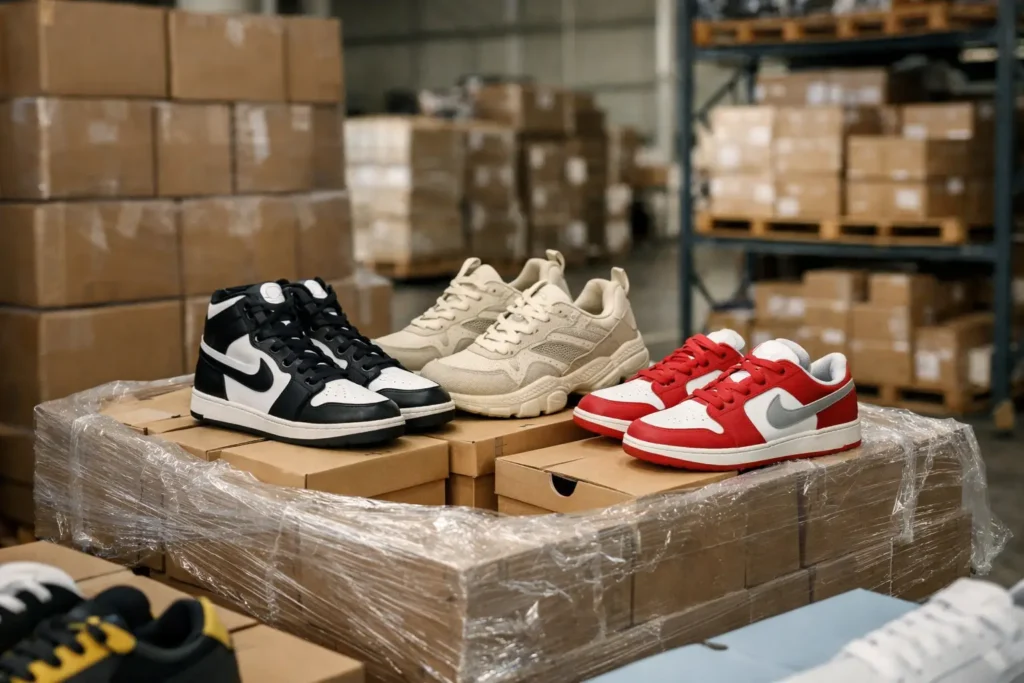
A sneaker pallet can look profitable at first glance, then lose money fast if the boxes are filled with slow-moving sizes, damaged pairs, or labels your buyers do not recognize. The best sneaker brands for pallet resale are not simply the most expensive names. They are the brands with dependable demand, broad size appeal, recognizable styling, and enough price room to cover shipping, marketplace fees, and your labor.
For most resellers, the strongest liquidation opportunity is a mixed pallet that combines high-demand athletic shoes with dependable everyday brands. That mix gives you multiple price points for online listings, local sales, discount stores, and flea markets. A pallet full of one hot label can work, but it also puts your entire margin at the mercy of condition, authenticity checks, and changing consumer demand.
Which Sneaker Brands Move Best in Resale Lots?
Nike and Jordan
Nike is usually the first brand resellers look for, and for good reason. Nike sneakers have broad recognition across age groups and sales channels. Running shoes, basketball styles, training shoes, casual low-tops, and kids’ pairs can all move when priced correctly. Even standard Nike models can offer solid turnover because shoppers know the brand and understand its retail value.
Jordan pairs can carry a higher upside, especially when they are new in box, complete, and in popular colorways. But Jordan pallets require more careful buying. A carton of less desirable colorways, uncommon sizes, worn pairs, or incomplete boxes is not the same as a pallet of collectible releases. Treat Jordan as a premium opportunity, not an automatic jackpot. Verify sourcing, inspect condition, and avoid building your entire purchase decision around a few visible pairs.
Adidas
Adidas is one of the most reliable brands for volume resale. It may not always produce the same single-pair profit as a sought-after Jordan, but it performs well in practical categories: lifestyle sneakers, soccer footwear, running shoes, slides, and kids’ shoes. Classic looks such as Superstar-style and casual court shoes have long-term recognition, while comfort-oriented models can appeal to buyers shopping for everyday wear.
Adidas works especially well for resellers who need steady inventory rather than hype-driven inventory. A clean, new-with-box Adidas pair at a discount can sell through quickly on local marketplaces, in discount retail, or through online stores. It is a brand built for repeat customers who want a name they trust without paying mall pricing.
New Balance
New Balance has become a serious resale brand, not just a comfort-shoe label. Popular lifestyle models can command strong prices, but the wider opportunity is its dependable appeal to runners, workers, parents, and buyers who want supportive daily footwear. That creates demand beyond sneaker collectors.
New Balance is often a good fit for mixed footwear pallets because it serves several buyer types at once. Premium lifestyle pairs may be listed individually for higher returns, while standard running and walking shoes can move at accessible prices. Condition still matters. Clean uppers, intact soles, matching pairs, and original boxes make a noticeable difference in how fast the inventory turns.
Puma, Reebok, and ASICS
Puma and Reebok can be strong value brands in liquidation lots, particularly for family footwear, school-season buying, gym use, and casual wear. They may not create headline-grabbing margins on every pair, but they can deliver dependable sales when your acquisition cost is low. Their biggest advantage is that you can price them aggressively while still giving shoppers recognizable branding.
ASICS deserves attention when the pallet includes running shoes in clean condition. Serious runners often shop by fit and performance instead of hype, so a well-priced ASICS pair can sell to a customer who knows exactly what they want. Product descriptions should include model name, size, width when available, and condition details. Those specifics help performance footwear stand out from generic sneaker listings.
Converse and Vans
Converse and Vans remain practical resale brands because their core styles are familiar and easy to understand. Canvas sneakers, skate-inspired shoes, slip-ons, and classic high-tops have a wide customer base. They are not dependent on a single trend, and they work well for teenagers, adults, and buyers looking for affordable casual shoes.
These brands are particularly useful in pallet resale when the lot has a good size spread. A pallet with multiple pairs in common adult and youth sizes can produce quick, repeatable sales. The trade-off is lower average selling prices compared with premium athletic brands. Your buy cost needs to stay low enough to preserve margin after sorting, cleaning, packing, and shipping.
Best Sneaker Brands for Pallet Resale Depend on Condition
Brand name gets a buyer to click, but condition closes the sale. A new pair with a damaged box may still sell well. A heavily worn pair with a premium logo may not be worth listing individually after cleaning and shipping costs. Before buying, understand whether the lot is overstock, shelf pulls, customer returns, closeouts, or a mixed-condition assortment.
New with box inventory is usually easiest to price and sell online because buyers can see the value quickly. Shelf pulls can also be attractive, though boxes may show labels, dents, or handling wear. Customer returns offer lower entry costs and can produce excellent deals, but they demand more work. Expect missing laces, mismatched pairs, scuffed soles, packaging issues, and occasional pairs that are not worth reselling.
For return pallets, plan for a sorting process before you count profit. Separate inventory into ready-to-list, clean-and-list, bundle or local-sale, and unsellable categories. This protects you from using an optimistic average resale number across the entire pallet. The money is made by knowing what each condition grade can realistically bring in your sales channel.
Buy Brand Mix, Not Just a Logo
The strongest pallets usually provide a balance of higher-value and fast-moving inventory. A few Nike, Jordan, or New Balance pairs can raise the average resale value. Adidas, Puma, Converse, Vans, and Reebok can supply the everyday volume that keeps cash moving. Kids’ footwear can be another advantage, especially for local sellers and discount stores, because parents often buy on price and brand recognition.
Do not ignore size distribution. A pallet loaded with very small or very large adult sizes can take longer to sell, regardless of brand. Common men’s, women’s, and youth sizes generally support faster turnover. If a manifest is available, review the size run along with the models, quantities, and stated condition. If the lot is unmanifested, price in more risk and avoid paying as if every pair is premium inventory.
Your resale channel should also shape your buying decision. Online marketplaces reward clear photos, accurate condition notes, and individual model research. A local store, flea market booth, or Facebook Marketplace operation can move lower-priced pairs faster and avoid some shipping costs. Sellers with several channels have the most flexibility because they can list the better pairs online and move basic or box-damaged shoes locally.
Questions to Ask Before You Buy a Sneaker Pallet
Before committing capital, get the details that affect your actual landed cost and resale speed. Ask these questions before you purchase:
- What is the inventory source and stated condition category?
- Is there a manifest, and does it show brands, sizes, quantities, and model information?
- Are shoes paired, boxed, and complete with laces or inserts?
- What freight, pickup, or delivery costs will be added to the pallet price?
- Is the lot sold as-is, and what inspection opportunity is available before purchase?
These questions are not paperwork. They are margin protection. A low pallet price can stop being a deal once freight, unusable returns, cleaning supplies, storage, and selling fees are included. Estimate a conservative average sale price, not the highest price you see online. Then subtract every cost before deciding what you can afford to pay.
Build Your Inventory Around Turnover
A profitable sneaker business does not need every pair to be a collector item. It needs inventory that buyers understand, prices that create urgency, and enough margin to restock. Start with a pallet size that matches your cash flow and storage space. Smaller lots let newer buyers learn grading and selling patterns, while larger pallets can lower unit cost for resellers with proven outlets.
Pallet Liquidation Wholesale Online gives resellers access to footwear inventory in box, pallet, and larger wholesale formats, allowing buyers to choose volume based on their budget and sales capacity. The right move is not chasing the flashiest logo in the lot. Buy brands your customers already ask for, inspect every pair, price with discipline, and keep turning inventory into the next purchase.