
If you are paying close to wholesale for resale inventory, your margin is getting squeezed before you even make the first sale. That is why more resellers are looking at wholesale liquidation pallets USA options to buy branded merchandise below retail, move inventory faster, and scale without tying up all their cash in traditional distribution channels.
For the right buyer, liquidation is not a side hustle trick. It is a serious inventory strategy. You get access to overstock, shelf pulls, customer returns, closeouts, and mixed merchandise lots that can create real resale upside when you buy carefully. The key is knowing what you are buying, how pallet pricing works, and where the risk sits before you place the order.
What wholesale liquidation pallets USA really means
In simple terms, Wholesale Liquidation pallets are bulk lots of merchandise sold below standard wholesale pricing. These lots usually come from retailers, distributors, or supply chain overages that need to be moved fast. Instead of buying case packs of one item, you are often buying mixed inventory grouped by category, condition, brand profile, or source type.
That matters because Wholesale Liquidation is not the same as ordering fresh inventory from a traditional brand distributor. The pricing is lower, but the merchandise can vary. One pallet might be built around shelf pulls in sellable condition. Another might include customer returns with tested and untested units mixed in. A third might be closeout inventory that is new but discontinued.
For resellers, that variation is where both the opportunity and the caution live. Lower buy cost creates room for margin. But margin only shows up when the lot matches your sales channel, labor capacity, and tolerance for sorting through mixed goods.
Why resellers keep buying liquidation pallets
The biggest reason is simple – cost. If you can buy recognizable merchandise at a fraction of original retail pricing, you have more room to price competitively and still make money. That matters whether you sell online, in a discount store, at a flea market, or through local pickup channels.
The second reason is speed. A pallet lets you add inventory fast. Instead of hunting product one item at a time, you can bring in volume with a single purchase. For growing sellers, that is often the difference between staying small and building repeatable inventory flow.
The third reason is flexibility. Not every buyer needs a truckload. Some want a box or a single pallet to test a category. Others need multiple pallets or full truckloads to feed a store or warehouse operation. A supplier that offers different lot sizes gives buyers a better way to match inventory with budget.
Footwear and sneaker pallets are a strong example of why liquidation attracts serious attention. Branded shoes move across multiple resale channels, and demand can stay strong when the buy cost is right. But the same logic applies to apparel, home goods, electronics, tools, toys, and general merchandise. The category matters less than the spread between your landed cost and your realistic resale price.
How to evaluate wholesale liquidation pallets USA inventory
The smartest buyers do not shop pallets based on headline discount alone. They look at the actual resale path. That starts with understanding the inventory type.
Overstock is usually one of the easier categories to work with because it may include new merchandise that simply did not sell through regular retail channels. Shelf pulls can also be attractive, though packaging may show wear, labels may be marked down, and presentation may not be perfect. Customer returns can offer strong value, but they also require more labor and a higher tolerance for unknowns. Closeouts and surplus goods can be excellent for bulk resale when product demand is still there.
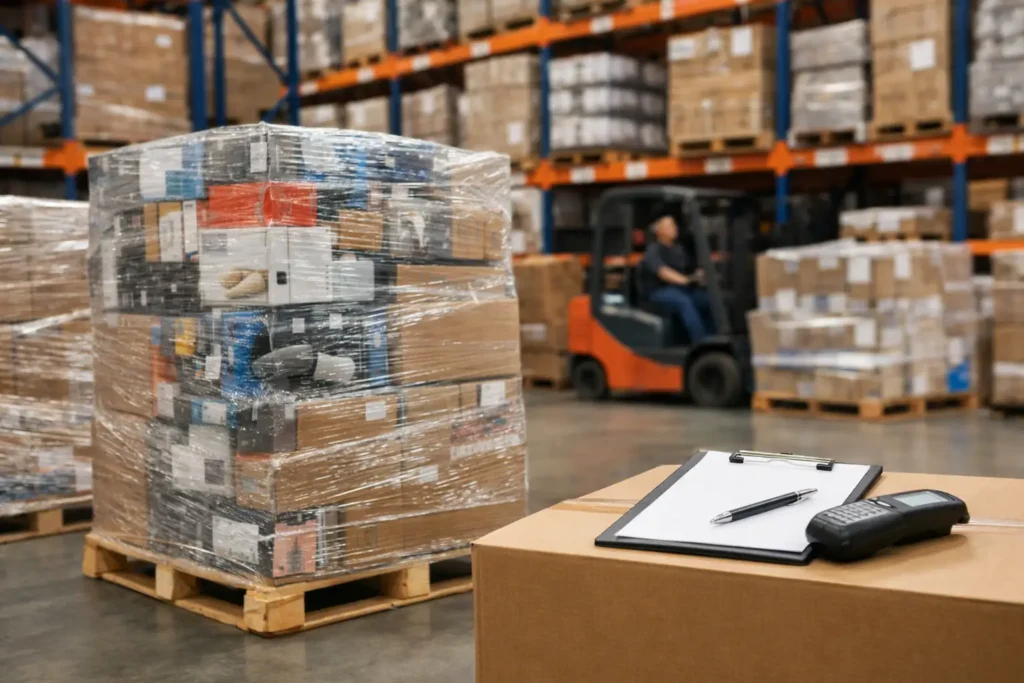
Condition is where many new buyers make mistakes. A pallet that looks cheap can become expensive if too much of the merchandise is incomplete, damaged, or hard to move. That does not mean returns are bad inventory. It means you need a plan. If you have the team, time, and outlet to test, sort, clean, repackage, and bundle goods, returns can still produce margin. If you need fast, low-touch turnover, cleaner overstock and shelf-pull loads may fit better.
Manifested and unmanifested lots are another big difference. A manifested pallet gives you some level of item detail, quantity data, or estimated retail reference. An unmanifested pallet leaves more room for surprise. Some buyers like that because they can uncover value. Others avoid it because surprise cuts both ways. The right choice depends on your experience and risk tolerance.
Buying for margin, not just for excitement
The biggest trap in Wholesale Liquidation is buying what looks interesting instead of buying what sells. Good resellers reverse that process. They start with the channel and customer, then choose inventory.
If you sell on marketplaces, think about listing effort, competition, return rates, and account restrictions. If you sell in a local storefront or discount outlet, think about foot traffic, price points, and how fast customers make buying decisions. If you flip goods through social platforms or local pickup, think about what people recognize and what they can buy without a lot of explanation.
Your real cost is not just the pallet price. It includes freight, unloading, storage, sorting time, cleaning, testing, packaging, and markdown loss on slower units. A pallet can still be a strong deal after all of that, but only if you build those numbers in from the start.
That is why experienced buyers often prefer categories they already know. Familiar inventory is easier to process and price. You understand what defects matter, what brands move, what sizes or models sit too long, and how quickly you can turn the lot into cash.
What to look for in a liquidation supplier
A dependable supplier does more than post low prices. They give buyers enough information to make a smart call. That includes clear category descriptions, realistic condition language, lot size options, and practical shipping coordination.
Support matters too. If you are buying your first pallet, you may need help understanding what a mixed lot includes or which inventory type fits your sales model. If you are buying at volume, you need consistency and speed. Either way, responsiveness matters because liquidation deals move fast and inventory availability can change quickly.
This is where direct-source positioning carries weight. Buyers want to feel they are purchasing from a company that understands liquidation flow, not from someone just repackaging inventory with inflated pricing. Pallet Liquidation Wholesale Online speaks directly to that reseller mindset by offering inventory formats for different budgets and sales stages, from smaller buys to larger volume orders.
Wholesale liquidation pallets USA for new buyers
If you are new, start tighter than your ambition. That does not mean thinking small forever. It means learning with controlled exposure. A smaller pallet or category-specific lot gives you cleaner data on sell-through, defect rate, labor time, and average margin.
New buyers often do best when they avoid inventory that needs heavy testing unless they already have the setup for it. A more straightforward category with recognizable products and simpler resale demand can teach you more in one cycle than a huge mixed load full of unknowns.
You should also be honest about your sales channel. A pallet filled with branded footwear may be a strong fit for sneaker networks, local resale, and online marketplaces. A pallet of mixed general merchandise may work better for discount bins, flea market setups, and bundle-style selling. Inventory fit is more important than chasing whatever looks cheapest.
Scaling from pallets to truckloads
Once a buyer has reliable sell-through and cash flow, bulk buying starts to make more sense. Truckloads can improve unit economics, but they also raise the stakes. Freight planning, warehouse space, staffing, and inventory turn all become more important.
The move from pallets to truckloads should happen when your operation can process volume without letting it sit. Sitting inventory eats margin. So does buying categories you cannot move quickly. More volume only helps when your system is ready for it.
A strong pallet supplier can support that growth by offering flexible lot sizes instead of forcing every buyer into the same model. That flexibility is valuable because not every reseller is trying to build the same business. Some want quick local flips. Others want steady marketplace inventory. Others are feeding stores and regional distribution.
The real advantage of buying right
The best liquidation buyers are not gamblers. They are disciplined operators who know their numbers, know their channels, and know when a discounted lot is actually a profitable one. Wholesale liquidation pallets USA inventory can create a major edge when you buy with a plan, not just with hope.
If you treat every pallet like a business decision instead of a treasure hunt, you put yourself in a stronger position to grow. Start with inventory you can understand, work with suppliers who can support the transaction, and focus on goods you know how to turn. The buyers who stay in this business are usually the ones who keep it simple, move fast, and protect margin on every load.
