
A truckload can make your month or bury your cash flow. That is the real reason resellers start searching for how to buy truckload liquidation inventory after they have already outgrown small test buys and need volume that actually moves the business forward. At this level, the upside is bigger, but so are the mistakes. One bad load, unclear manifest terms, or freight surprise can wipe out the margin you thought you had.
For serious resellers, truckloads are not just bigger pallets. They are a different buying decision. You are committing more capital, more storage space, more labor, and more time to sort, grade, list, and move merchandise. If you buy the right load from the right source, you can lower your cost per unit and scale faster. If you buy on hype alone, you can get stuck with slow inventory that ties up money for weeks.
How to Buy Truckload Liquidation Inventory Without Guessing
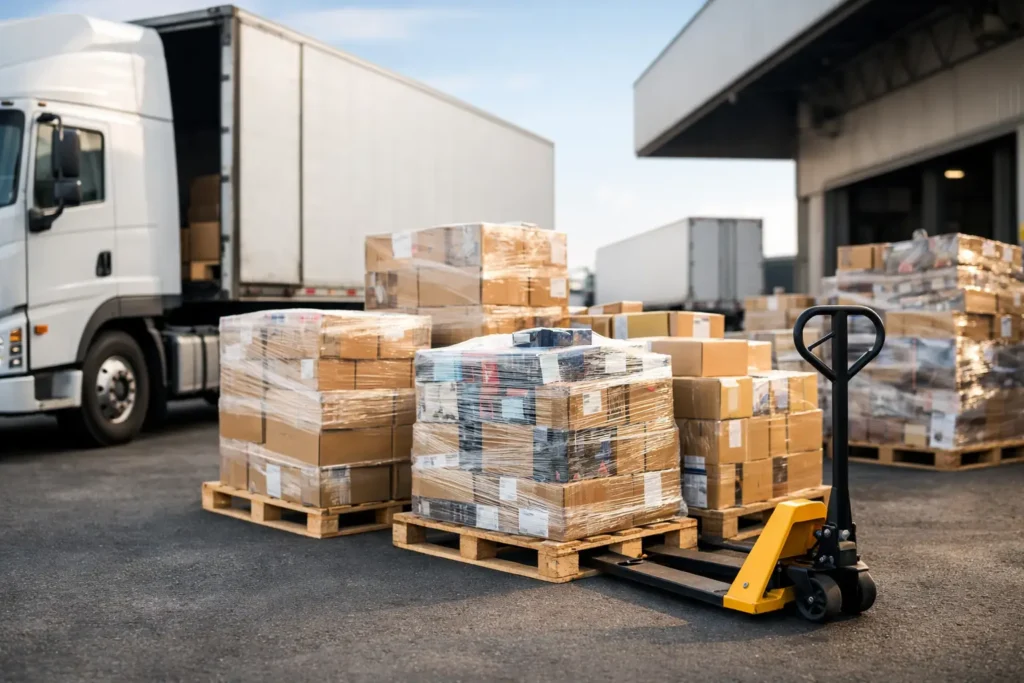
The first step is knowing what kind of truckload fits your resale model. A lot of buyers make the mistake of chasing whatever sounds cheap instead of buying inventory that matches how they actually sell. If your business does well with branded footwear, then a truckload built around shoes or sneakers makes more sense than a random mixed general merchandise load. If you run a discount store, a mixed truckload may work because you can move many categories under one roof.
Start with your sales channels. Amazon sellers usually need cleaner inventory, stronger SKU consistency, and fewer condition issues. Flea market and bin store sellers can often absorb more mixed quality if the buy price is low enough. Facebook Marketplace and local storefront operators may do well with bulky or off-category items that are harder to ship but easy to sell locally. The load has to fit your channel, not just your budget.
Next, understand the inventory type. Overstock usually offers the cleanest opportunity because the goods were never sold through to the end customer. Shelf pulls can still be profitable, but packaging may show wear, labels may be marked, and assortments can be uneven. Customer returns can produce strong upside if purchased correctly, but the risk jumps fast because item condition varies. Closeouts and surplus can be excellent for resale when the category is in demand and the lot has enough consistency to market properly.
Know What You Are Actually Buying
Truckload buyers need to stop thinking in broad labels and start asking load-specific questions. “General merchandise” tells you almost nothing. You need to know the source, category mix, condition range, estimated unit count, pallet count, and whether a manifest is included. If there is a manifest, ask how accurate it is expected to be. No liquidation seller can promise perfect manifests on every load, but you should know whether the list is a close guide or just a rough sample.
Condition matters more than new buyers realize. A truckload of customer returns can still be profitable, but only if your numbers account for testing, repackaging, missing parts, and unsellable units. A truckload of overstock may cost more upfront, yet save money on labor and shrink because more items are resale-ready. The right buy is not always the cheapest buy.
This is where experienced buyers separate themselves. They do not just ask, “What is the price?” They ask, “What percentage of this can I realistically list and move in the next 30 to 60 days?” That is a business question, not a bargain-hunting question.
How to Buy Truckload Liquidation Inventory
Before you commit, work backward from resale value. Estimate what the top 20 percent of the load can sell for, what the middle can realistically move for, and what the bottom will need to clear at. Then subtract your freight, labor, supplies, platform fees, storage costs, and expected loss rate. If the margin still makes sense, keep talking. If the deal only works on best-case assumptions, walk away.
A truckload can look cheap on a per-pallet basis and still be a bad buy. Freight changes the math fast, especially if the load is coming from across the country or requires special delivery arrangements. Limited access locations, residential drops, liftgate service, and tight unloading windows can all add cost. Buyers who ignore freight until the end often find out too late that their deal is no longer a deal.
Storage is another hidden cost. Do not buy a full truckload unless you know where it is going, how it will be unloaded, and how quickly it can be processed. Inventory sitting untouched in a trailer or stacked in an unorganized warehouse is not an asset. It is delayed cash.
Vet the Supplier Before You Send Money
If you are learning how to buy truckload liquidation inventory at a higher level, supplier quality matters as much as load quality. A real liquidation partner should be able to explain lot types clearly, discuss manifests honestly, set expectations on condition, and help you understand shipping options. You want direct answers, not vague language.
Look for consistency in how loads are described. If every truckload is presented as premium, high value, and guaranteed profit, that is a red flag. Liquidation always has variables. Good suppliers talk in real terms about category, condition, volume, and logistics. They do not pretend risk disappears just because the price is low.
It also helps to work with a supplier that offers multiple lot sizes. That usually means they understand buyer growth and are set up to support both testing and scale. If you have bought boxes or pallets successfully from the same source, moving into truckloads becomes more manageable because you already understand their inventory style and process. For many resellers, that step-up path is smarter than jumping straight into a random full load from an unknown seller.
How to Buy Truckload Liquidation Inventory and Control Risk
The best truckload buyers do not eliminate risk. They control it. One way is by staying in categories they understand. If you know footwear, apparel, home goods, or small electronics, stay close to that lane. Familiar categories are easier to grade, price, and sell. You already know what moves, what sits, and what condition problems are manageable.
Another way is by choosing the right load format. A manifested truckload gives you more visibility, but it may cost more. An unmanifested load can sometimes produce stronger upside if you know the source and trust the supplier, but it also requires more tolerance for uncertainty. There is no universal best option. It depends on your experience, your labor capacity, and how tight your cash flow is.
You should also think about exit strategy before purchase. If part of the load underperforms, can you liquidate it by the pallet, in bin sales, through local bundles, or in wholesale lots to smaller buyers? Smart operators build margin on the front end and backup options on the back end.
Freight, Receiving, and Operations Matter More Than You Think
Once the load is booked, the job is not done. It is just changing stages. Confirm delivery details early. Make sure your location can receive a truckload and that your team is ready to unload and inspect. If you are relying on a third-party warehouse, they need dimensions, pallet counts, and appointment details in advance.
When the shipment arrives, document the load as it is received. Count pallets, note visible damage, and compare what you received against the paperwork. If there is a problem, you need records immediately, not three days later after the load has been broken down and moved around. Organization at receiving protects you when something is off.
Speed matters after delivery. The faster you sort and identify the best inventory, the faster you can recover capital. That is one reason truckloads work well for established resellers with systems in place. If your team cannot process a full load quickly, you may be better off buying multiple pallets instead of forcing a truckload too early.
When a Truckload Makes Sense
A truckload makes sense when you already know your customer, your category, and your numbers. It makes sense when your sales volume justifies larger buys and your operation can handle storage, sorting, and resale at scale. It also makes sense when the freight economics improve your landed cost enough to beat smaller lot purchases.
It does not make sense just because the discount looks big. Bigger inventory only helps when it turns into faster sales and stronger margin. For many buyers, the smartest path is to build confidence through smaller loads first, then move into truckloads once the process is repeatable. A supplier like Pallet Liquidation Wholesale Online can be part of that path if you want direct-source access and lot sizes that grow with your business.
The real win is not buying more inventory. It is buying inventory you can move with confidence, price with discipline, and turn back into cash without getting stuck holding someone else’s problem.
