
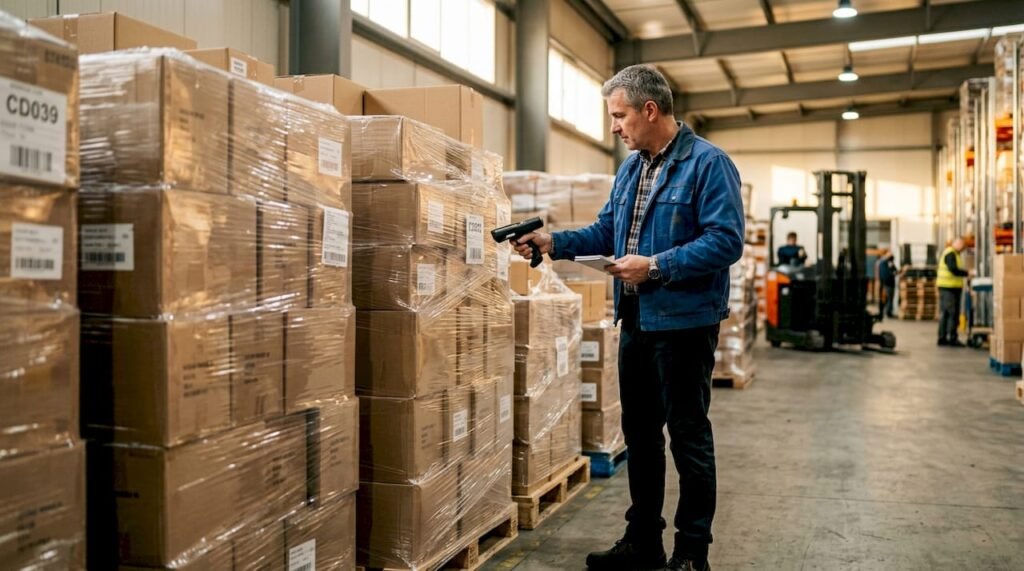
Retail overstock liquidation is defined as the process of selling excess, unsold merchandise in bulk to recover cash and free up storage space. Retailers sell overstock pallets because holding surplus inventory costs money every single day. Warehouse space, insurance, and labor all add up fast. Overstock pallets consist of new, sealed goods, which means they carry higher recovery rates of 50–60% compared to customer returns. For small business owners and resellers, that recovery gap is where real profit lives.
Why retailers sell overstock pallets: the core business case
Overstock pallets are pallets of new, unsold merchandise that a retailer could not move through normal sales channels. They differ sharply from customer returns, shelf pulls, closeouts, and salvage lots. Each type carries a different condition profile and a different profit ceiling.
Customer returns recover closer to 40% of retail value. Salvage pallets recover only 15–25%. Overstock pallets, by contrast, contain new sealed goods that offer higher margin potential because they require almost no reconditioning. That difference in condition is the single biggest reason retailers and buyers both prefer overstock over other liquidation types.
The table below shows how the main pallet types compare on condition, typical price range, and profitability.
| Pallet type | Condition | Typical price range | Recovery rate |
|---|---|---|---|
| Overstock | New, sealed | $200–$2,500 | 50–60% |
| Shelf pulls | New, open box | $150–$1,800 | 40–55% |
| Customer returns | Mixed, used | $100–$1,200 | ~40% |
| Salvage | Damaged, incomplete | $50–$500 | 15–25% |
Overstock pallets also carry lower damage rates than returns, which reduces reconditioning time and labor costs for buyers. That translates directly into faster resale and better margins. For a small business owner buying pallets to resell, starting with overstock is the lowest-risk entry point in the liquidation market.
Pro Tip: When comparing pallet types, always check the manifest for item counts and condition codes before you bid. A shelf-pull pallet priced like overstock is a margin trap.
Why do retailers choose to sell overstock pallets?
Retailers sell overstock pallets for five clear operational reasons, and none of them are about charity pricing.
The first reason is space. Retail and warehouse space costs money per square foot, and slow-moving inventory blocks that space from new, higher-margin products. Fast inventory turnover is critical for maintaining liquidity and retail competitiveness. A retailer sitting on 500 units of last season’s blenders cannot receive next season’s air fryers without clearing the floor.
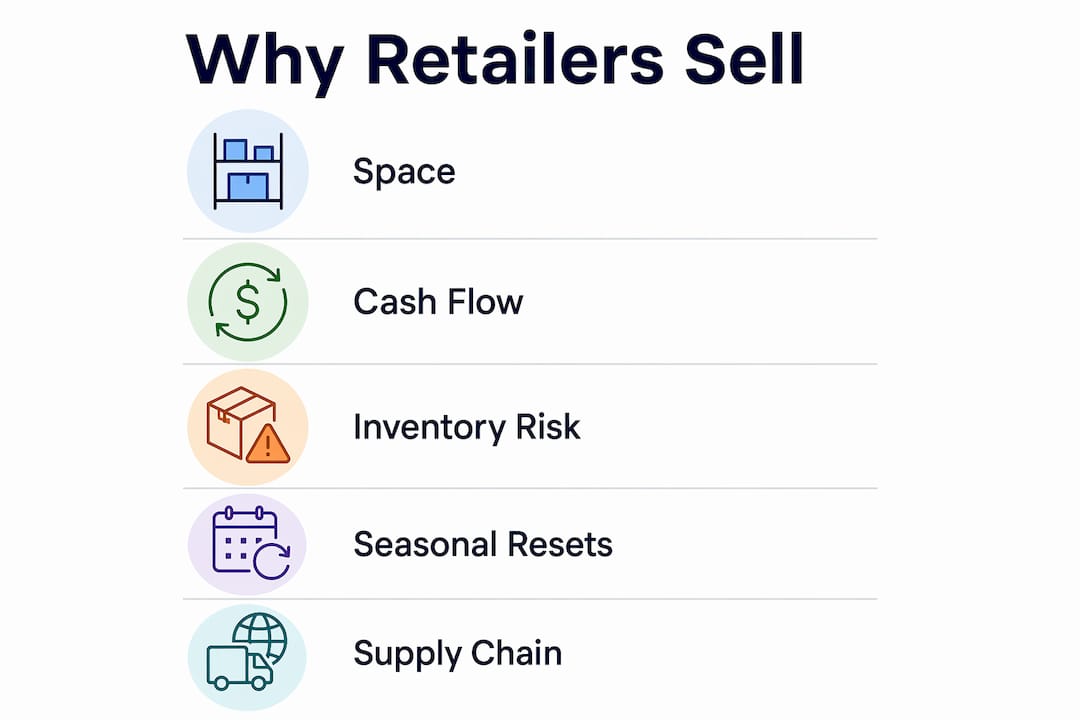
The second reason is cash flow. Selling overstock pallets converts dead stock into working capital. That cash goes back into purchasing new inventory, paying suppliers, or covering operating costs. Retailers value liquidating slow-moving merchandise quickly, even at deep discounts, because the alternative is a write-off.

The third reason is inventory risk management. Products go off-trend, expire, or get discontinued. Holding them too long means taking a total loss. Retailers use overstock liquidation to exit positions before the merchandise loses all value.
The fourth reason is seasonal resets. Major retailers run planned seasonal resets in january, july, and around major holidays. Seasonal overstock liquidation clears the floor for new planograms and promotional displays. This is why overstock pallet availability spikes predictably after the holiday season and back-to-school periods.
The fifth reason is supply chain efficiency. Liquidating overstock through B2B channels keeps the supply chain moving. It prevents bottlenecks at distribution centers and reduces the cost of holding inventory across multiple locations.
Pro Tip: Time your overstock pallet purchases around seasonal resets. January and late july typically bring the highest volume of new, sealed overstock from major national retailers.
How do retailers price and manage the sale of overstock pallets?
Retailers price overstock pallets at 70–90% below retail to guarantee fast sales. That discount range sounds steep, but it reflects the retailer’s goal: speed over margin. A pallet sitting in a liquidation warehouse for 90 days costs more than one sold at a steep discount on day one.
Pricing decisions rely on four factors:
- Acquisition cost — what the retailer originally paid for the merchandise.
- Freight and handling — the cost to move pallets from the retail distribution center to the liquidation buyer.
- Damage rate estimates — even overstock pallets carry a small percentage of damaged units that reduce resale value.
- Overhead recovery — administrative costs for manifesting, sorting, and listing the pallets.
Manifest accuracy is the single most important factor for buyer confidence. A manifest lists every SKU, quantity, and condition on a pallet. Retailers who provide accurate manifests attract repeat buyers and command better prices over time. Buyers who perform detailed ROI analysis consistently recover 20–35% more margin than those who focus only on manifest face value.
Retail overstock liquidation is increasingly conducted through direct online B2B marketplaces, which improve transparency and cut out middlemen. This shift benefits both retailers and buyers by creating cleaner pricing signals and faster transaction cycles.
Pro Tip: Never calculate your profit using the retail price on the manifest. Check actual sold prices for those SKUs on resale platforms before you bid. Optimistic retail extensions are the fastest way to lose money on a pallet.
How can retailers and small businesses maximize profits with overstock pallets?
Profit in overstock pallet buying comes from discipline, not luck. The buyers who consistently win treat overstock as a predictable business system rather than a treasure hunt. Here is what that looks like in practice.
- Focus on unit economics. Total manifest value is a vanity metric. What matters is the profit per unit after labor, shipping, and fees. Handling many low-value items can erode margins quickly due to labor intensity. A pallet of 200 items at $1 each requires far more processing time than 20 items at $10 each.
- Source consistent categories. Buying the same product categories repeatedly builds expertise. You learn which brands sell fast, which SKUs sit, and what price points move on your specific sales channel. That knowledge compounds over time.
- Run a full landed cost calculation before bidding. Add pallet price, freight, platform fees, and estimated labor. Then subtract that total from your projected sell-through revenue. If the margin is under 2x your cost, pass on the pallet.
- Use local inspection when possible. Local inspection is a proven method for reducing risk from inaccurate manifests and unknown pallet conditions. If you cannot visit a warehouse, connect with local bin store owners who can give you ground-level sourcing intelligence.
- Source from verified channels. Platforms and marketplaces that specialize in retail overstock liquidation provide manifested lots with condition transparency. Palletliquidationsokc connects resellers directly with surplus inventory from major national retailers, covering categories from electronics to clothing to household goods.
You can find detailed guidance on sourcing overstock profitably through Palletliquidationsokc’s resource library, which covers category selection, ROI frameworks, and supplier vetting.
Pro Tip: Avoid impulse bidding. Experienced buyers know their landed costs before they enter any auction. Set a maximum bid based on your margin target, then walk away if the price exceeds it.
What are the key risks and challenges in overstock pallet liquidation?
Overstock pallets carry lower risk than returns or salvage, but they are not risk-free. Retailers and buyers both face real challenges that can cut into margins if left unmanaged.
- Condition variance. Even new, sealed pallets can include units damaged in transit. A small percentage of damaged goods on every pallet is normal. Budget for it in your ROI model rather than being surprised by it.
- Logistics costs. Freight is often the largest hidden cost in pallet buying. A $400 pallet with $200 in freight changes your cost basis dramatically. Always get freight quotes before finalizing a purchase.
- Market demand fluctuations. A category that sold fast six months ago may be saturated today. Electronics, for example, cycle quickly. Buyers who focus on unit economics and track sell-through rates by category avoid getting caught with slow-moving stock.
- Poor manifest accuracy. A manifest that overstates quantity or misrepresents condition leads to a bad purchase. Vet your suppliers carefully. Platforms with verified manifests reduce this risk significantly. You can use a supplier comparison checklist to evaluate sources before committing.
- Return and restocking overhead. Buyers who resell on platforms with return policies absorb return costs. Factor those costs into your margin calculation upfront, especially for electronics and apparel categories.
Key Takeaways
Retailers sell overstock pallets to recover cash, free up space, and manage inventory risk before merchandise loses value.
| Point | Details |
|---|---|
| Overstock recovery rates | Overstock pallets yield 50–60% recovery, far above salvage or customer returns. |
| Pricing strategy | Retailers price overstock at 70–90% below retail to guarantee fast liquidation. |
| Unit economics matter | Calculate profit per unit, not total manifest value, to protect your margins. |
| Seasonal timing | January and late july bring peak overstock volume after major retail resets. |
| Manifest accuracy | Verified manifests from trusted suppliers reduce risk and improve ROI predictability. |
What I’ve learned after years of watching the overstock market
The most common mistake I see from new buyers is treating overstock pallets like lottery tickets. They bid on whatever looks exciting, ignore freight costs, and then wonder why the numbers don’t work. The buyers who build real businesses do the opposite. They pick two or three product categories, learn them deeply, and source consistently from the same verified channels.
The market has matured significantly. Buyers are more sophisticated now, and that means the easy wins are gone. You cannot just buy any overstock pallet and expect a 3x return. You need to know your sell-through channels, your average days-to-sell by category, and your true landed cost down to the dollar.
One thing most articles miss: labor is often the biggest margin killer, not the pallet price. A pallet of 300 low-value items looks cheap until you calculate the hours spent sorting, listing, and shipping each unit. High-unit-count pallets require a processing infrastructure that most small operators do not have.
The future of retail overstock liquidation is moving toward more direct B2B relationships and better manifest transparency. Retailers want reliable buyers who close deals fast. Buyers want accurate data. Platforms that deliver both will dominate the next five years. If you are building a resale business now, position yourself as a reliable, repeat buyer in a specific category. That reputation opens doors that one-off bidders never see.
— elianne
Palletliquidationsokc: your source for verified overstock pallets
Palletliquidationsokc works directly with major national retailers to source overstock, shelf pulls, and closeout merchandise across electronics, clothing, tools, and household goods. Every pallet comes with manifest documentation so you know exactly what you are buying before you commit.
Whether you are an Amazon seller looking for wholesale pallets for Amazon or a discount store owner building consistent inventory, Palletliquidationsokc offers bulk lots sized for small and mid-size operations. The platform also publishes a buyer’s guide for wholesale liquidation that walks you through ROI calculations, category selection, and supplier vetting. If you are serious about building a profitable resale operation, this is where to start.
FAQ
What are overstock pallets exactly?
Overstock pallets contain new, unsold merchandise that retailers could not sell through normal channels. They typically include sealed, undamaged goods with recovery rates of 50–60% of retail value.
Why do retailers sell overstock pallets at such deep discounts?
Retailers price overstock pallets at 70–90% below retail because speed matters more than margin recovery. Holding costs, warehouse space, and inventory risk make fast liquidation more profitable than waiting for full-price sales.
How do I find overstock pallets to buy?
Overstock pallets are available through B2B liquidation platforms, direct retailer programs, and wholesale pallet suppliers like Palletliquidationsokc. Look for suppliers who provide verified manifests and clear condition descriptions.
What is the difference between overstock and customer return pallets?
Overstock pallets contain new, unsold goods with recovery rates of 50–60%. Customer return pallets contain used or opened items with recovery rates closer to 40% and damage rates of 15–30%, which reduce resale value significantly.
How do I calculate profit on an overstock pallet?
Add the pallet price, freight, platform fees, and estimated labor, then compare that total to your projected sell-through revenue based on actual market prices. Buyers who run detailed ROI analyses recover 20–35% more margin than those who rely on manifest face value alone.
Recommended
- How Overstock Inventory Pallets Make Money
- How to Evaluate Return Pallets for Profit – Pallets in USA
- Buy Overstock Wholesale Boxes – Pallet Liquidation Wholesale
- How to Source Overstock Inventory Profitably -Pallets in USA
