
A Ryobi pallet can look like an easy win from the outside – recognizable brand, steady demand, and plenty of buyers looking for affordable tools, batteries, and outdoor equipment. But for resellers, the real question is simpler: do ryobi pallets leave enough room for profit after freight, testing, sorting, and resale time? That depends on the pallet mix, condition, and how disciplined you are on your buy price.
Why ryobi pallets get reseller attention
Ryobi is a strong liquidation category because the brand already has a built-in market. Buyers know the name, homeowners actively shop it, and budget-conscious customers often prefer Ryobi over paying full retail for new cordless tools and lawn equipment. That makes resale easier than trying to move unknown private-label inventory.
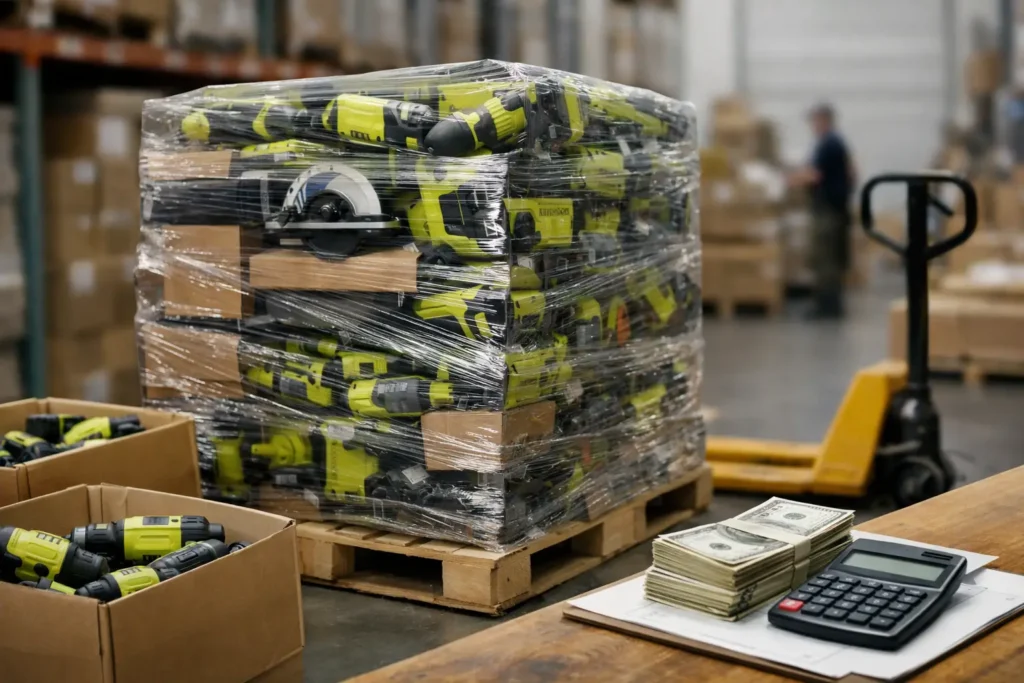
The other reason ryobi pallets stand out is variety. A single pallet can include drills, drivers, saws, blowers, trimmers, chargers, batteries, accessories, and boxed combo kits. That gives resellers multiple price points to work with. You can move smaller accessories fast, bundle mid-ticket items, and hold better tools for stronger margins.
Still, brand recognition does not erase liquidation risk. Ryobi customer returns are not the same as new shelf-pull merchandise, and a pallet loaded with incomplete tools or dead batteries can eat into profit quickly. Buyers who do well with this category usually treat it like a numbers business, not a guessing game.
What’s usually inside a Ryobi pallet
Most ryobi pallets are mixed lots. That means you should expect a blend of product types and conditions rather than a pallet full of one exact SKU. Some loads lean toward power tools, while others include a heavier mix of outdoor equipment, chargers, or accessories. In many cases, the value comes from a few stronger pieces carrying the rest of the lot.
A cleaner pallet may include overstock or shelf pulls in retail packaging, sometimes with minor box damage and little to no product use. That type of inventory usually resells faster because the customer sees cleaner presentation and lower risk. A customer returns pallet can still be profitable, but it requires more labor. You may need to test tools, match batteries to chargers, clean units, verify missing parts, and decide whether each item is best sold individually, as-is, or in bundles.
This is where new buyers make mistakes. They focus on total estimated retail value and ignore the composition of that value. Ten pieces with high retail prices do not help much if six are incomplete, two need replacement batteries, and one is too expensive to ship profitably. What matters is resale-ready value, not printed retail.
The profit side of ryobi pallets
Ryobi usually performs best for resellers who already know how they will move the merchandise before they buy. If you sell locally, larger outdoor tools and combo kits may be your best play because you avoid marketplace fees and complicated shipping. If you sell online, compact tools, chargers, and accessories tend to be easier to list and move consistently.
Margins can be attractive when the pallet cost is low enough and the condition is workable. Branded power tools often attract steady search traffic, and buyers are comfortable purchasing used or open-box units if the discount is clear. That said, your margin is not created by the brand alone. It is created when you buy the right grade, at the right landed cost, for the right sales channel.
Landed cost is where many liquidation buyers lose the deal. The pallet price may look low, but once freight, handling, replacement parts, testing time, and listing labor are added in, the numbers tighten. This is especially true for heavier Ryobi outdoor equipment. A blower or mower may have good resale demand, but if shipping or local delivery becomes a hassle, the deal may not scale well.
How to evaluate ryobi pallets before buying
The smartest way to look at ryobi pallets is by condition, completeness, and sell-through speed.
Condition is the first filter. Overstock and shelf pulls usually carry less risk than customer returns, though they may also cost more upfront. Paying more for cleaner merchandise can make sense if it saves you hours of testing and cuts your return rate. If the pallet is made up mostly of returns, you need to build in a much wider cushion.
Completeness matters just as much. Tools without batteries, chargers without cords, or kits missing core attachments can still sell, but not at the prices many buyers expect. When manifests are available, check whether the lot includes full kits or bare tools. Bare tools can move well if your customers already own the battery platform, but they narrow your buyer pool.
Sell-through speed is the third piece. Some Ryobi items flip fast because they solve everyday problems and appeal to a broad audience. Drills, drivers, compact saws, and batteries usually generate more consistent demand than niche attachments or oversized seasonal equipment. If too much of the pallet is tied up in slow-moving items, your cash stays locked longer.
Where buyers go wrong with Ryobi liquidation
The biggest mistake is assuming every branded pallet is automatically premium inventory. Ryobi is a recognizable name, but liquidation still means mixed condition, possible wear, and incomplete units depending on the source. A good brand helps resale, but it does not guarantee easy money.
Another mistake is overpaying because the manifest looks exciting. A pallet stacked with combo kits and outdoor tools can create urgency, but if the buy price is too aggressive, there is no room left for error. One bad battery batch or a handful of damaged tool housings can shift the entire return.
Buyers also underestimate labor. Ryobi pallets often need sorting, testing, charging, pairing, and cleaning. That process is manageable if you have a system. It becomes expensive if every pallet turns into a long manual project with no defined workflow. Resellers who scale this category typically have a process for intake, grading, and pricing from day one.
Best sales channels for ryobi pallets
Ryobi inventory gives you flexibility, but each channel has trade-offs.
Local marketplaces can be strong for heavier tools, lawn equipment, and mixed bundles. You keep more margin, avoid shipping headaches, and can move product quickly if you price aggressively. The downside is more buyer communication, pickups, and occasional no-shows.
Online marketplaces work well for smaller tools, batteries, chargers, and accessories. You get wider reach and more consistent buyer demand, but fees and return exposure are higher. Product condition and testing notes need to be accurate or you will spend profit handling disputes.
Discount retail and flea market setups can also work if you buy enough volume. In that environment, Ryobi branding helps customers make faster purchase decisions. A buyer may not know every model number, but they recognize the name and understand the value when your price comes in well below retail.
Buying smarter from a liquidation supplier
If you are sourcing ryobi pallets for resale, supplier quality matters as much as product quality. You want clear lot descriptions, realistic grading, transparent buying terms, and support that helps you understand what you are purchasing. Fast-moving inventory creates urgency, but rushing into vague lots is how buyers get stuck with expensive surprises.
It also helps to match the lot size to your business stage. A smaller pallet can be the better move if you are still learning the category, testing local demand, or refining your processing workflow. Bigger volume only helps when your systems are ready for it. If you already know your sell-through and customer base, scaling into larger mixed Ryobi loads can make sense.
At Pallet Liquidation Wholesale Online, the value for resellers is straightforward: get access to branded liquidation inventory at below-retail pricing, choose lot sizes that fit your budget, and buy with margin in mind instead of gambling on random goods. That same mindset should guide any Ryobi purchase. Buy for resale reality, not excitement.
Are ryobi pallets worth it?
Yes, ryobi pallets can be worth it for resellers, but only when the numbers work after every real expense is counted. The brand helps, demand is there, and mixed lots can create multiple resale paths. But this is not a category where you should rely on headline retail value or assume every item is flip-ready.
The better play is to stay disciplined. Focus on condition, completeness, landed cost, and how quickly you can turn the inventory through your strongest channel. A well-bought Ryobi pallet can create solid cash flow and repeatable profit. A rushed buy can leave you sorting dead batteries and slow-moving equipment for weeks.
If you want this category to pay, treat ryobi pallets like inventory, not hype. That is where the margin is.
